Simon.
Below is the introduction to what we have built. It begins, as ohu did, with something personal.
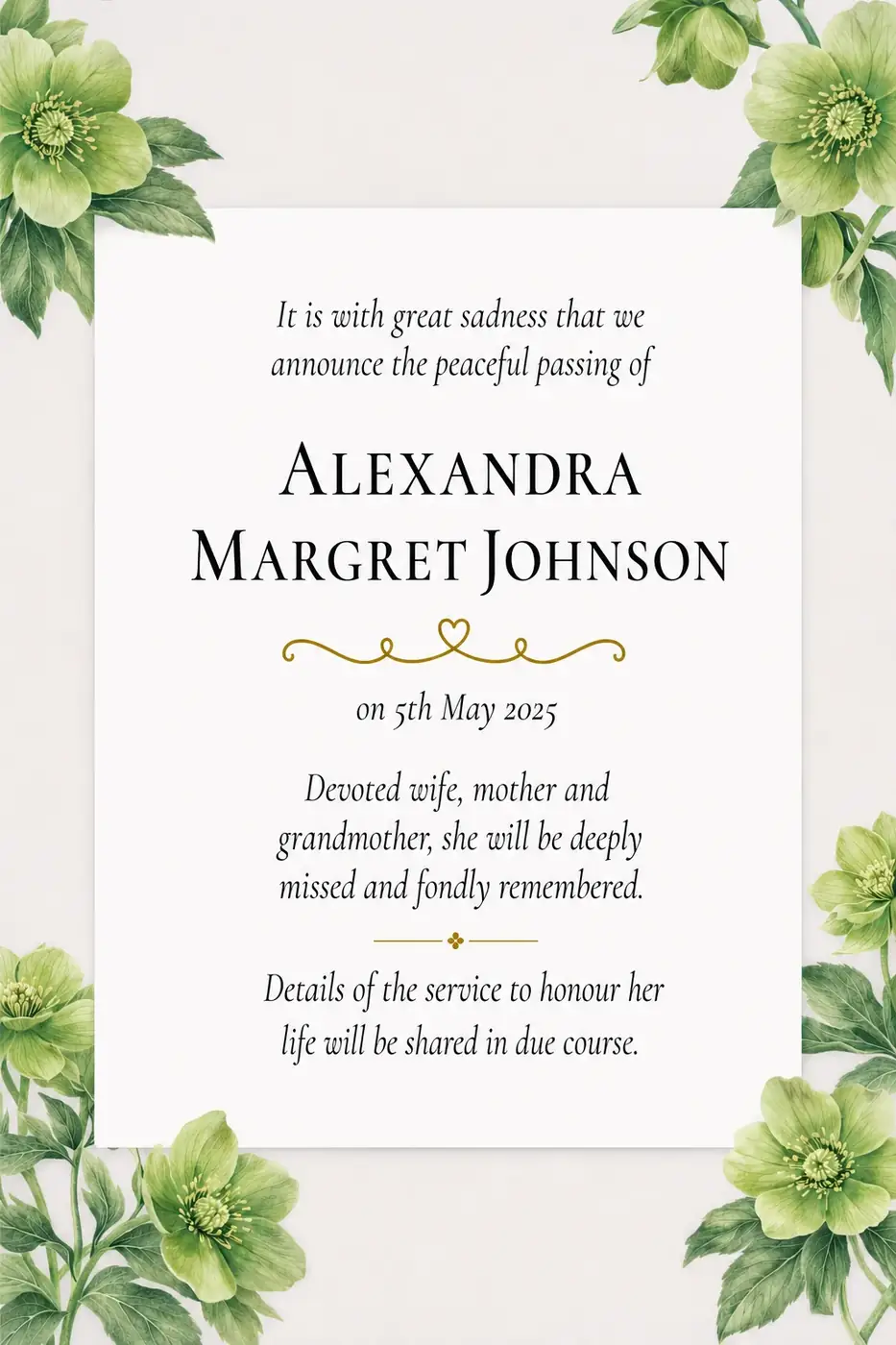
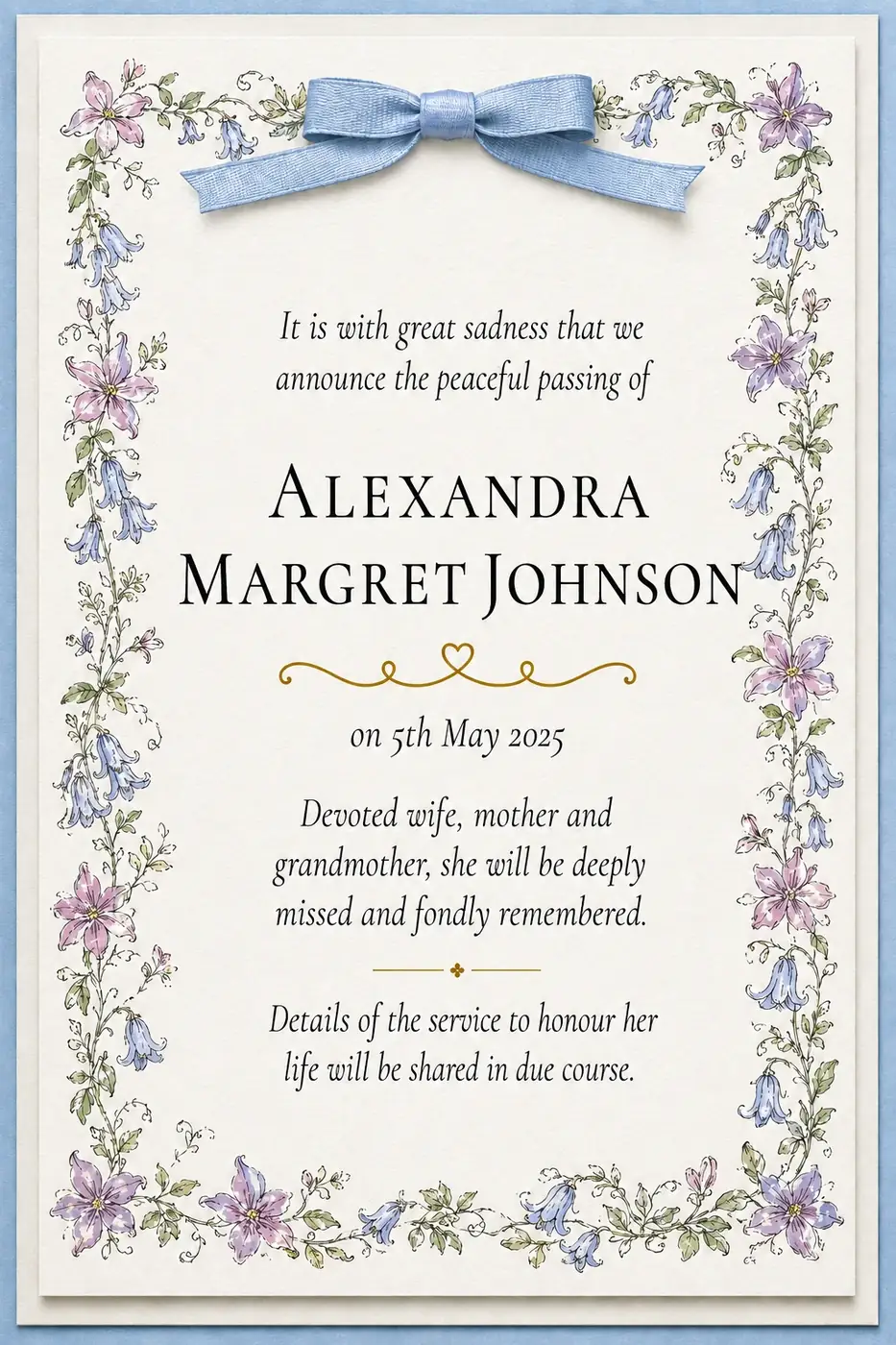
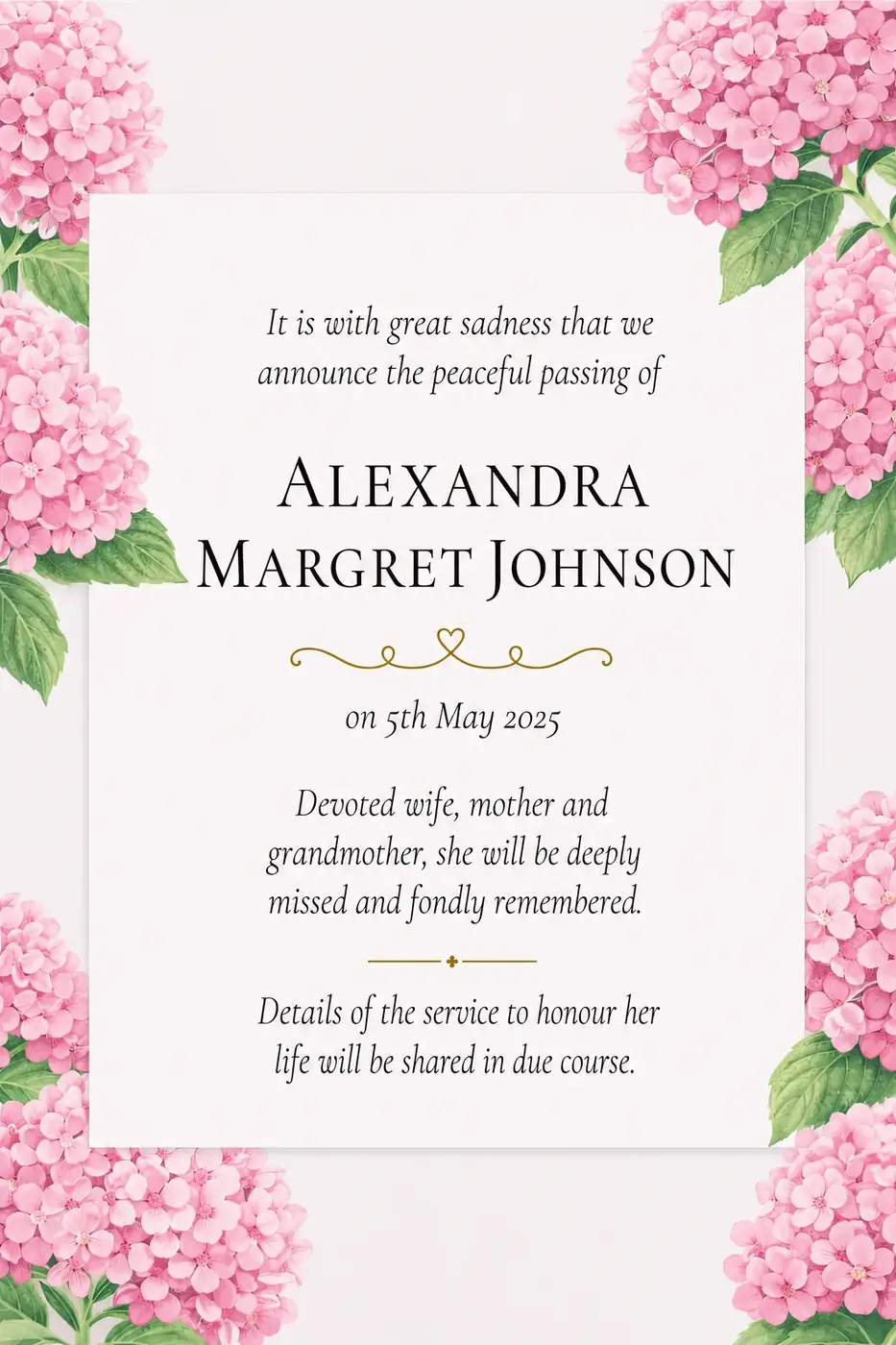
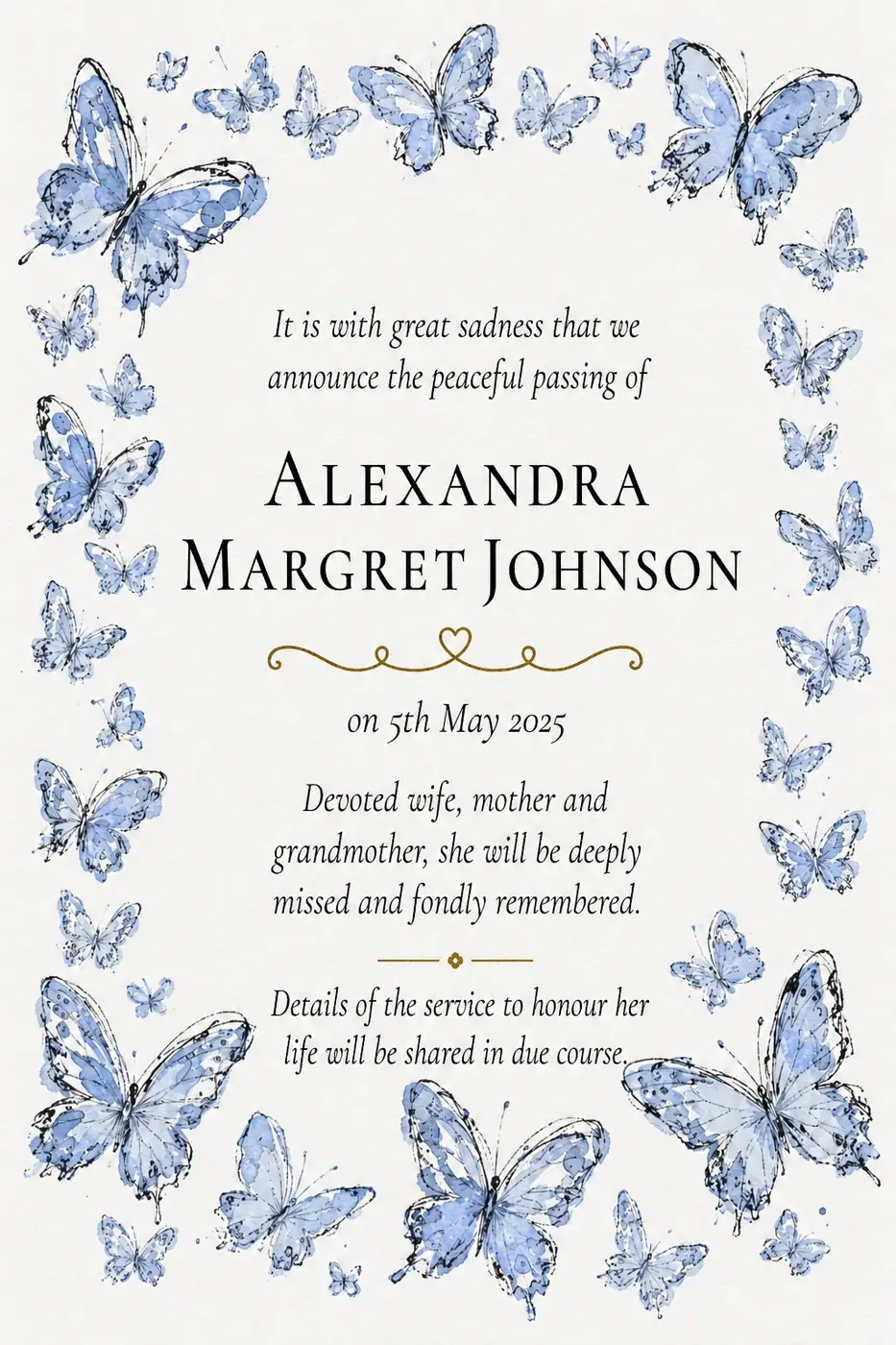
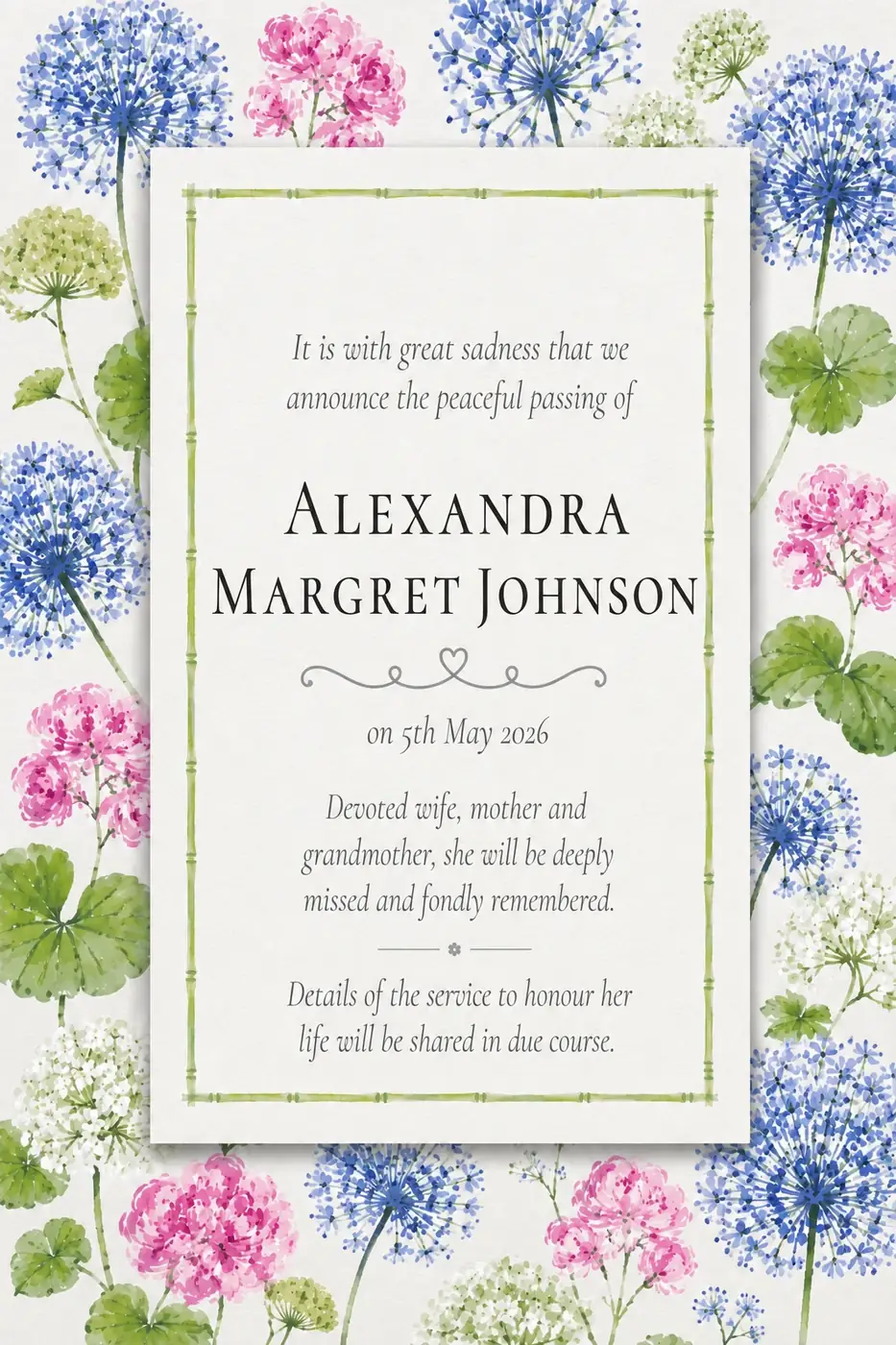
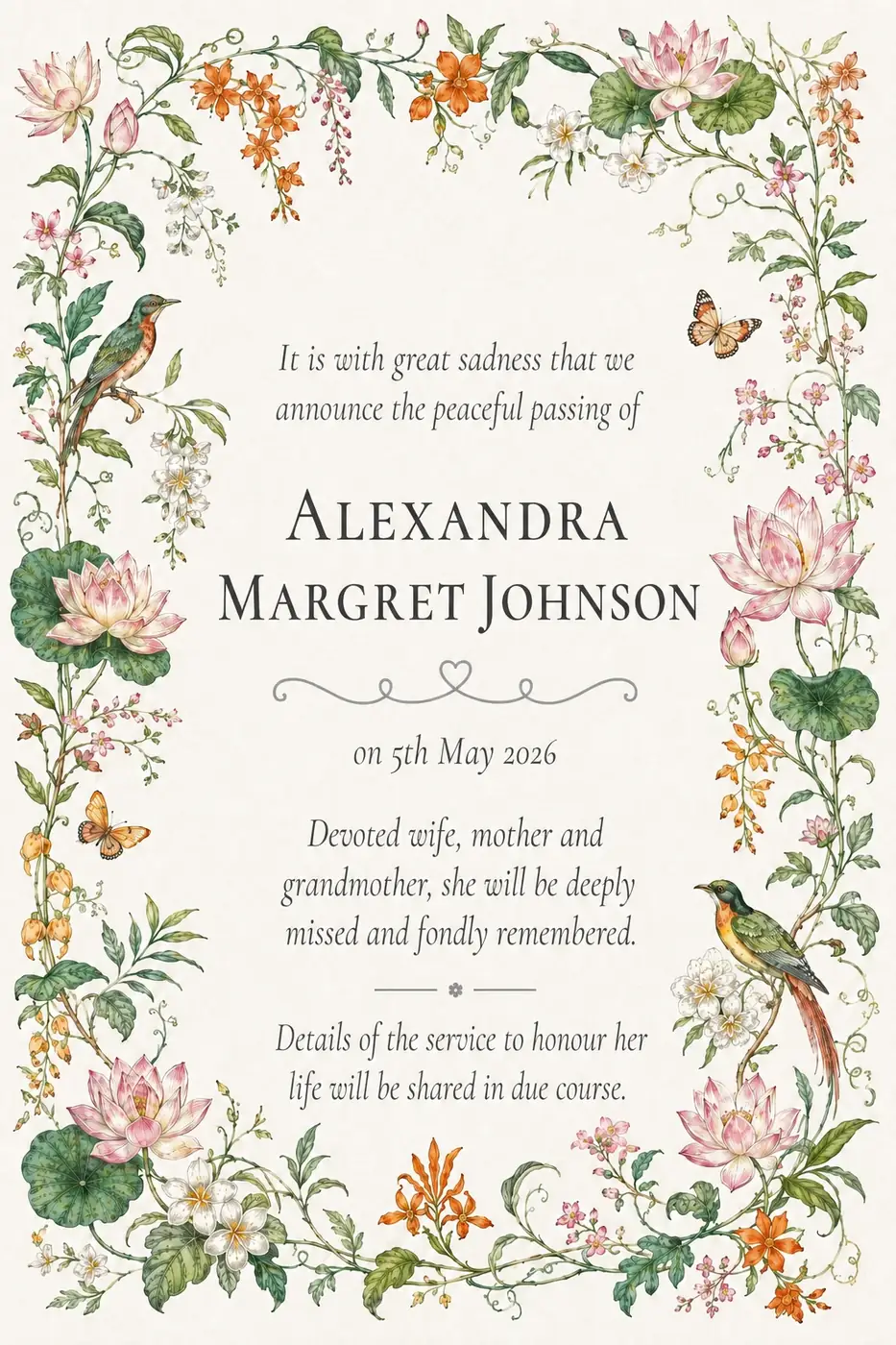
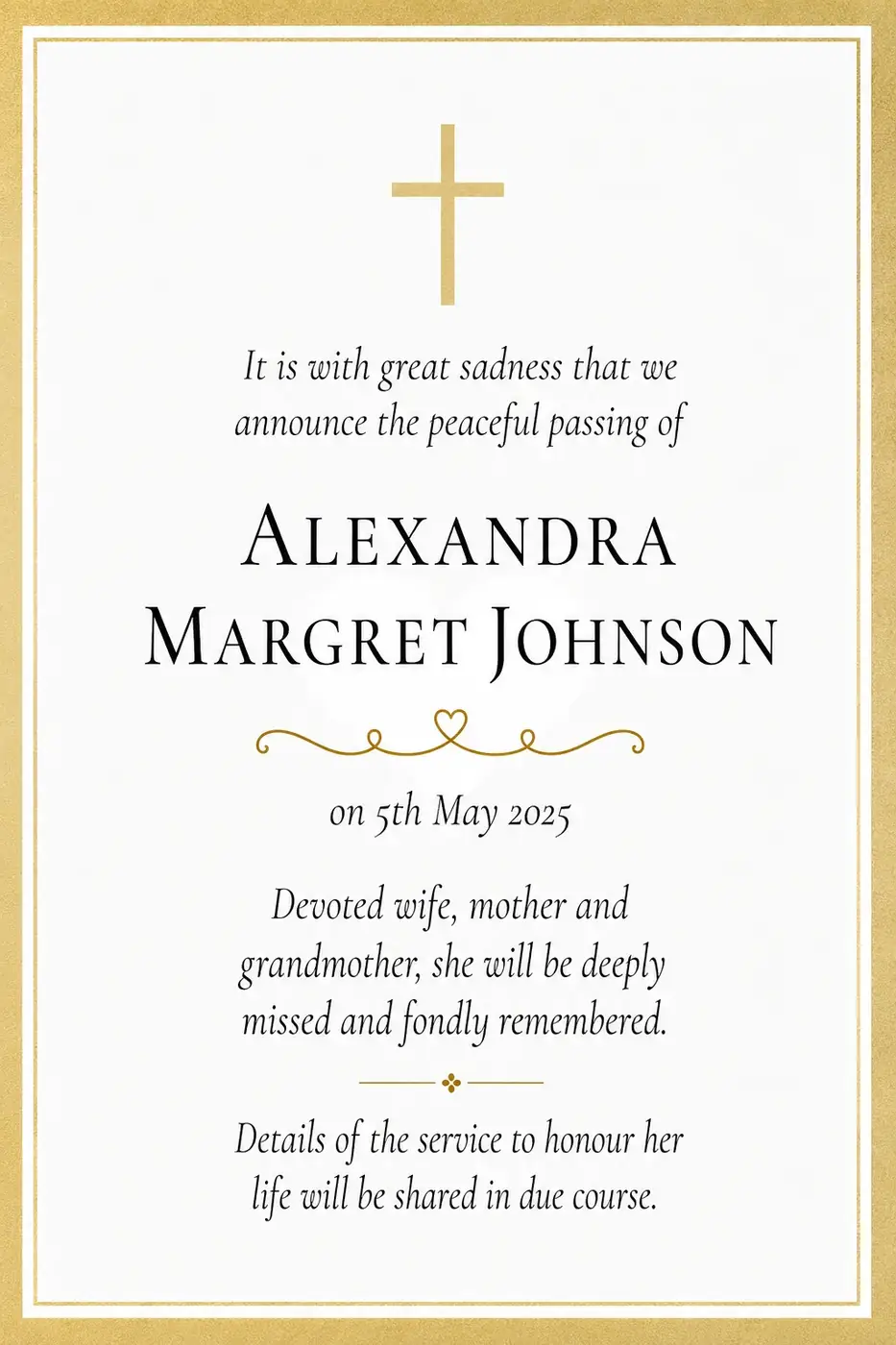
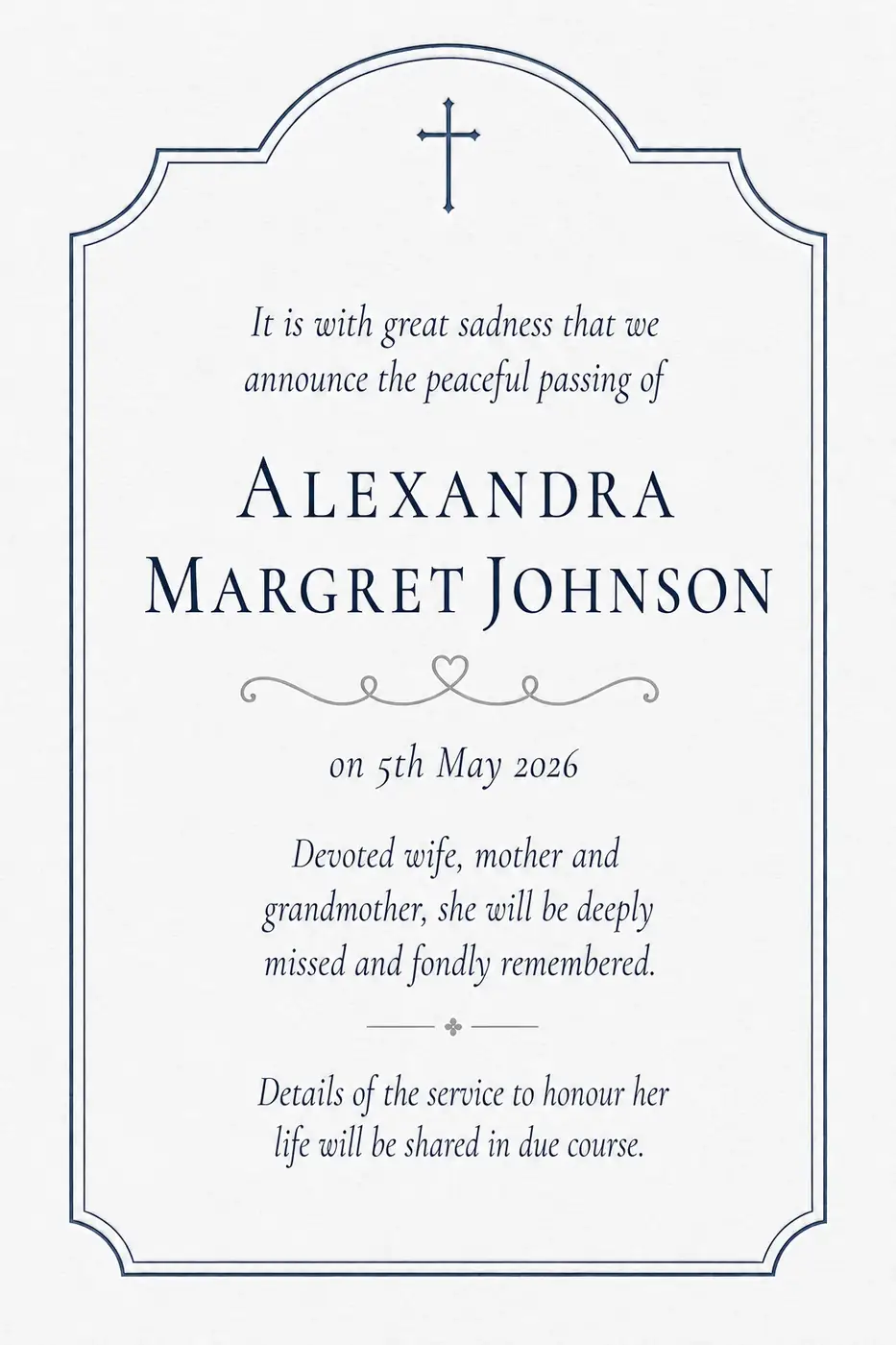
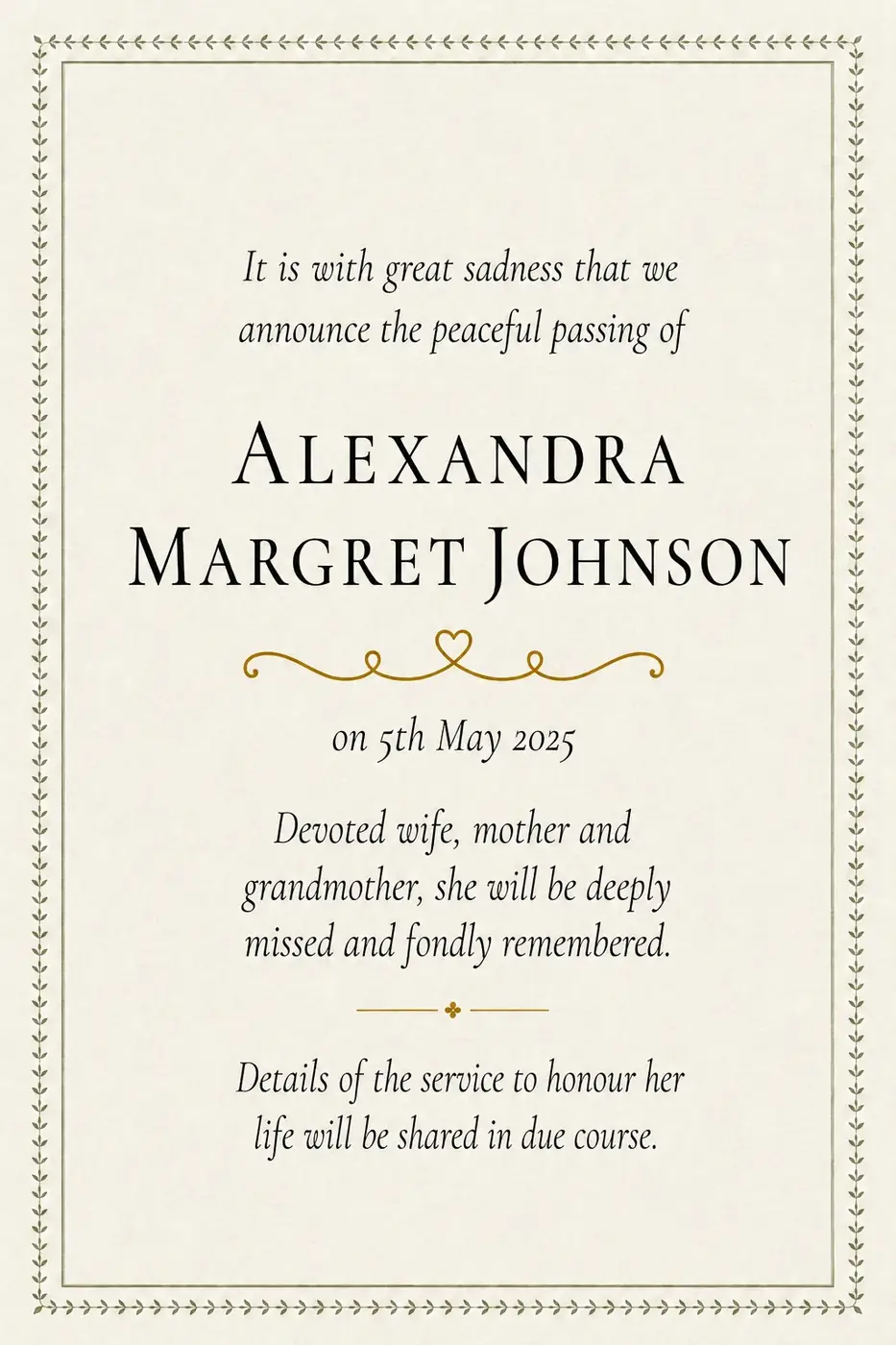
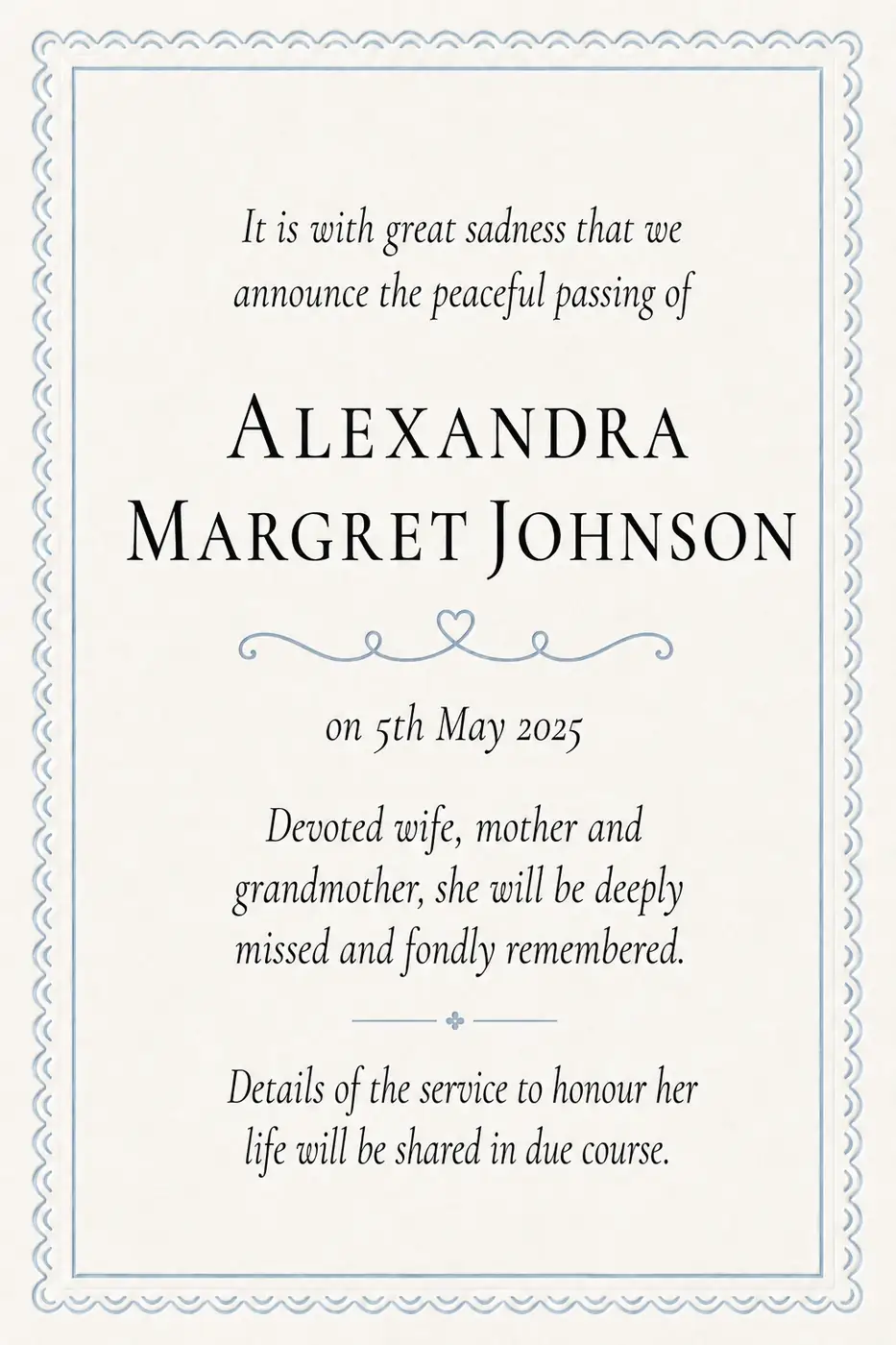
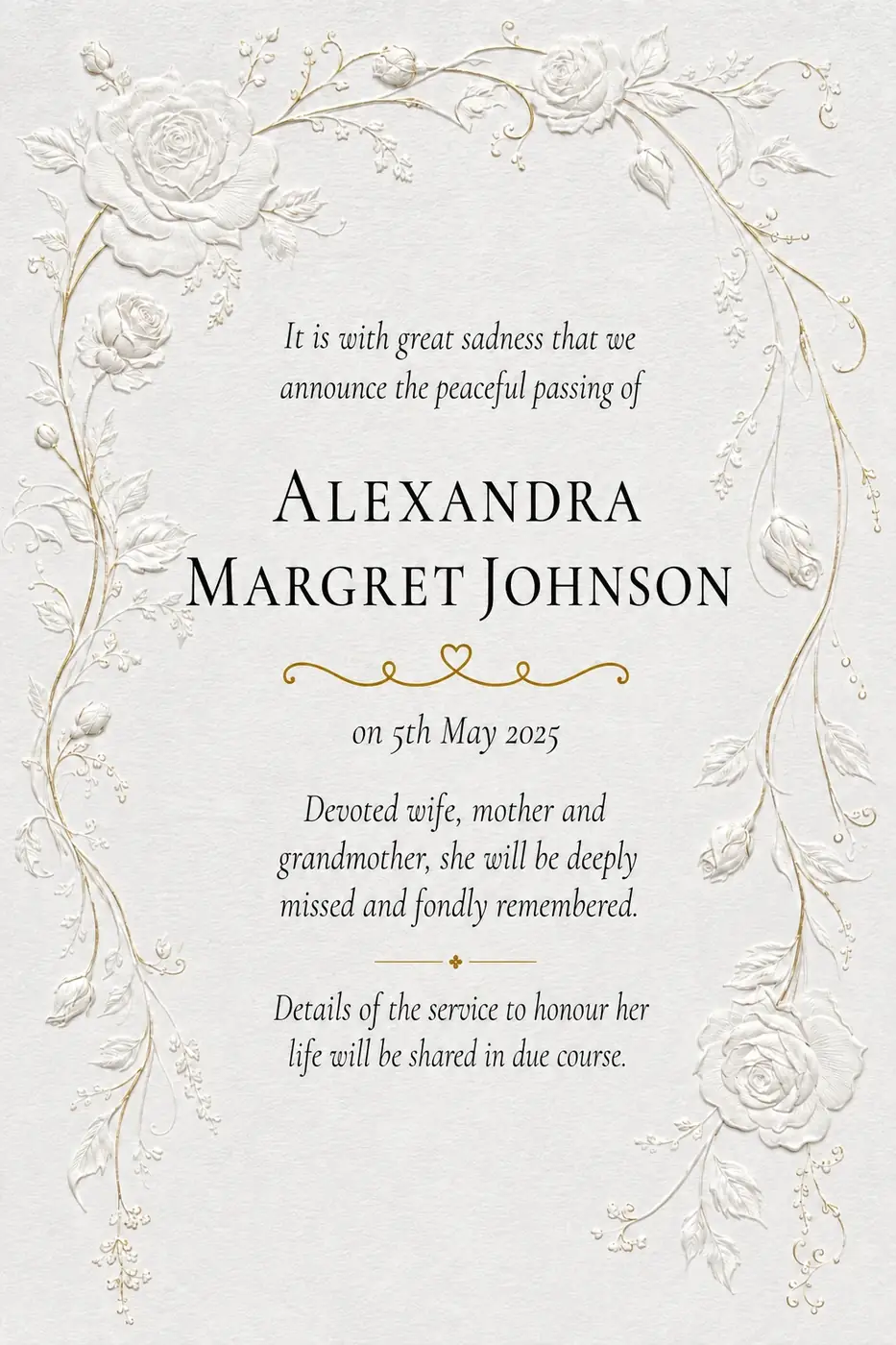
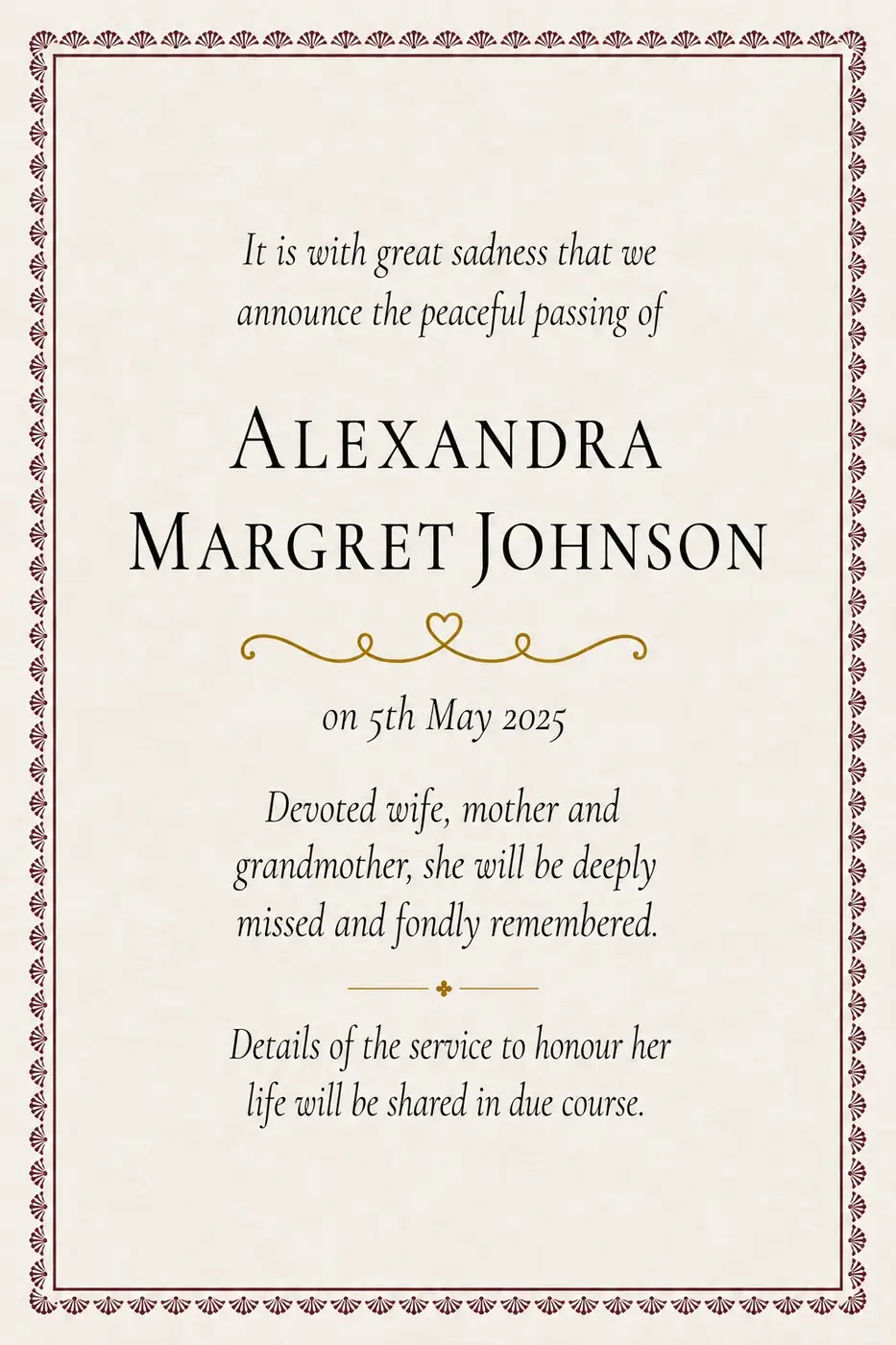
You will notice how many of the frames carry a Celebration of Life theme. That is deliberate, and personal: it is in memory of my mother, who lived into her early nineties, and we felt the truest way to remember her was to celebrate her life.
So we built ohu from the ground up, specifically for the funeral sector and for the two things that had failed us: the early death notice, and the fortnight of coordination that has to follow it. Over three years we have designed a library of many hundreds of frames, each one suggested automatically from what we already know about the family.
As we have not yet launched, I would value your thoughts on who we should be working with. I look forward to working with you again soon.
When she died there was no shortage of tribute services for the fuller story of a life, yet nothing made for the moment that comes first: a beautiful way to share the death notice itself.
Before the funeral notice, there is the death notice.
ohu helps funeral directors give every family a free, beautiful early death notice: a simple way to tell people gently, see who has been told, and keep everyone updated in the fortnight before the funeral.
ohu helps funeral directors give every family a free, beautiful early death notice: a simple way to tell people gently, see who has been told, and keep everyone updated in the fortnight before the funeral. This full introduction adds the wider story, the partnership shape, the principles we have designed around trust, and the due-diligence questions owners, IT, legal and data-protection teams are likely to ask.
The simple idea, in two minutes.
A family has to tell people someone has died. Until now, nobody has built the right thing for that moment.
The closest people are usually told first. Then the news begins to travel: friend to friend, relative to relative, neighbour to neighbour, colleague to colleague.
That natural sharing is how the news is normally told. But it is also hard to manage. People are missed. Details drift. The funeral information is not ready yet. And over the next fortnight, the same family has to keep a wider circle gently aligned.
ohu does not replace that natural sharing. It makes it easier to manage.
We help the funeral director give the family a free, beautiful early death notice. The family can share it with the people closest to them. Those people can pass it on. Everyone receives the same message. The family can see who has been told.
Later, when funeral details are ready, they are added in one place and the same circle can be kept updated.
For the family
Tell people gently, see who has been told, and keep everyone updated.
For the funeral director
A generous first act of care before the journey narrows to packages and price.
For the wider circle
One clear message, shared naturally, with funeral details added when they are ready.
We know funeral directors are rightly cautious about letting a new company anywhere near an at-need family. That caution is healthy, and we share it. We have worked alongside the funeral sector for more than 25 years, and we ran the departments at Barclays and HSBC that looked after accounts when someone died. That experience is exactly why we took this seriously enough to spend more than three years designing and building it before asking for your trust. This introduction starts with that simple first moment. The fuller sections below then show the product, the partnership shape and the due-diligence material for teams who need to look under the bonnet.
What ohu is
A closed, family-led early death notice and coordination service, built specifically for the first days after a death and the fortnight that follows. It always works alongside the funeral notices, tributes and donation partners your firm already uses.
The short introduction below is enough to understand the idea. The full version keeps the deeper story and due diligence available when you want it.
Start with the introduction. Go deeper when you need to.
Funeral directors do not hand trust to new suppliers quickly, and they should not. The shorter introduction is designed for a first sitting. It explains that first moment, how the notice works, how it sits beside what you already offer, and what the fortnight quietly does for your firm. The full version keeps the deeper material available: why we built ohu the hard way, how we protect the boundaries, the founding-partner invitation, and the questions due-diligence teams tend to ask.
The first notice, and the fortnight that follows.
Around every funeral, the family normally tells the people closest to them first. Almost everyone else hears it from someone else: friend to friend, circle to circle, two and three steps removed from the family.
ohu does not replace that natural sharing. It gives it a centre.
A family can create a free, beautiful early death notice and share it with the people closest to them. Those people can pass it on to others who should know. Everyone receives the same message. The family can see who has been told, and who may still be missing.
That matters because the funeral details are often not ready when the news first needs to be shared. The date may not be confirmed. The venue may not be final. The family may not yet be ready to choose photographs or write a fuller tribute.
But people still need to know.
ohu gives the family a calm first notice, and then one place to add funeral details and updates over the next couple of weeks.
The news travels anyway. ohu helps it travel clearly, gently and with the family still able to see what has happened.
Death notice first. Tribute later.
The death notice is not the tribute.
The death notice
The death notice carries the news in the first hours and days, often before the funeral has a date. It is simple, beautiful and practical. It helps people know that someone has died, helps the family see who has been told, and gives everyone one place to return to when details are added.
The tribute
The tribute comes later. It is where photographs, memories, donations, funeral details and the fuller story of a life naturally belong.
Both matter. They simply do different jobs.
A funeral notice or tribute page is often too late to help with the first wave of telling people. ohu sits before it. Then, when the family is ready, ohu helps the same circle move naturally towards the funeral notice, tribute, donation page, webcast, flowers, reception details or anything else your firm already provides.
ohu does not provide the funeral notice, tribute or donation page itself. We work with the partners your firm already uses, and we enhance them by being there earlier, then bringing the family's circle to them when you are ready.
ohu is not trying to replace the later tribute. It is built for the moment before the tribute is ready.
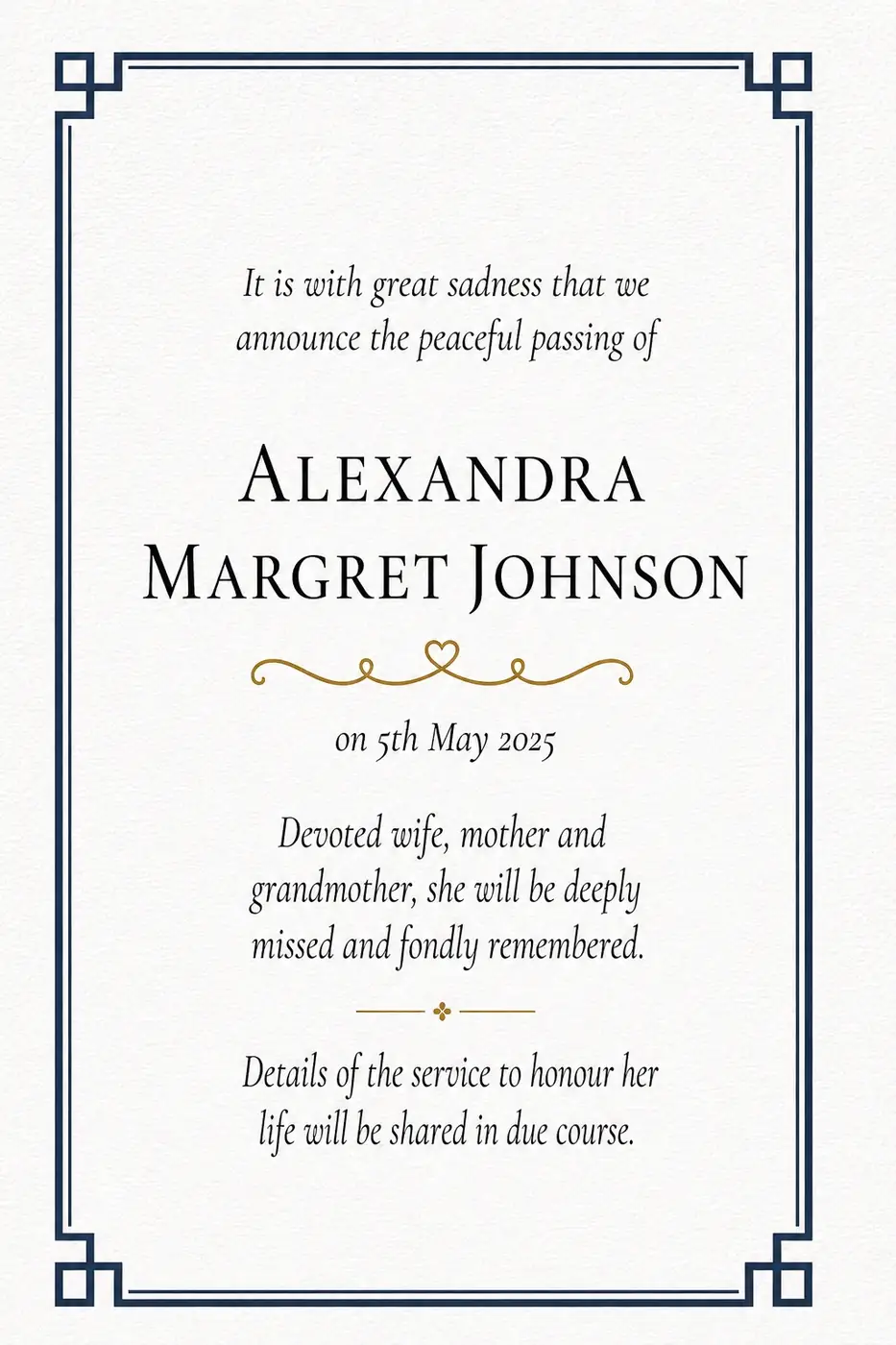
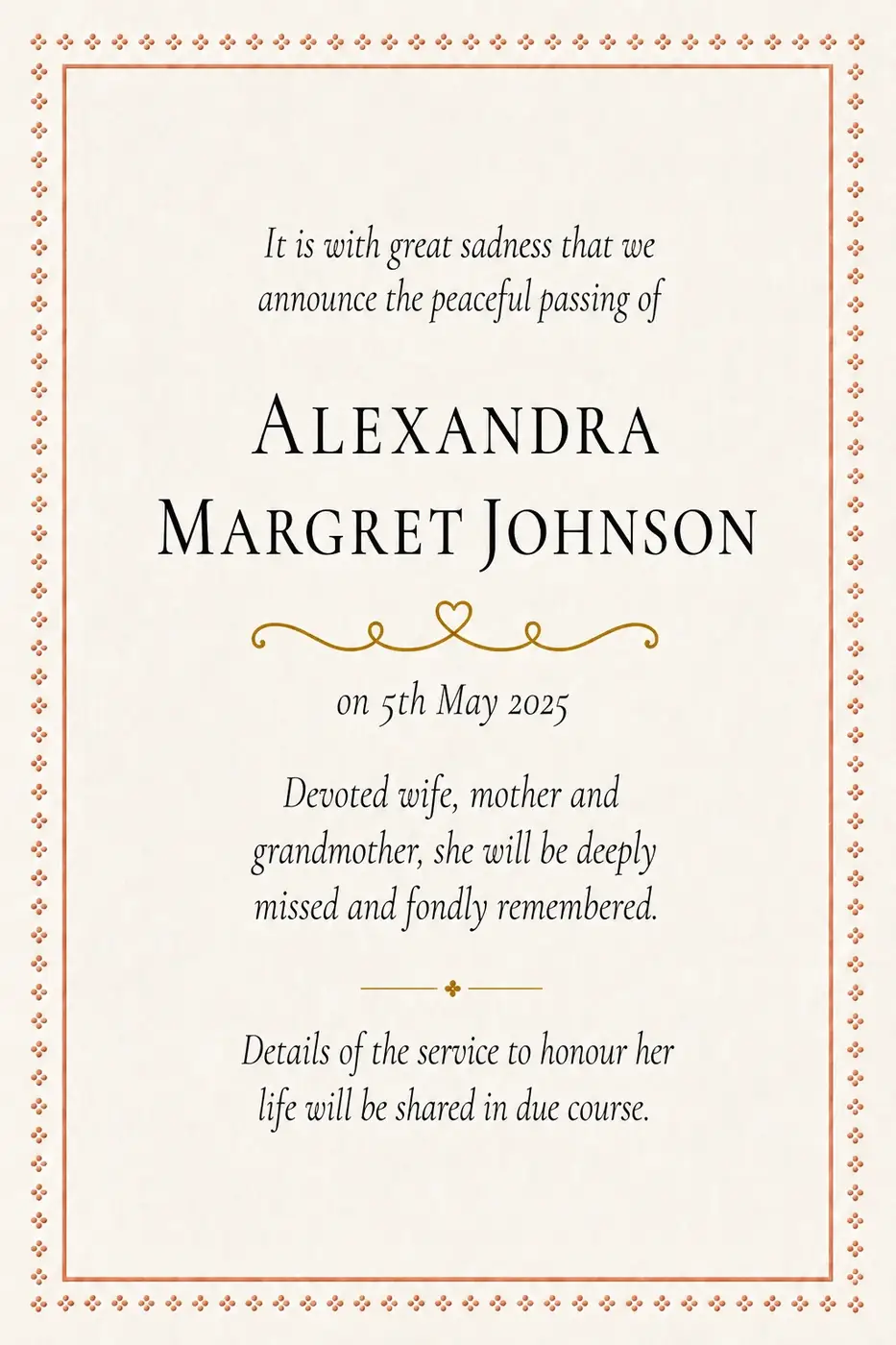
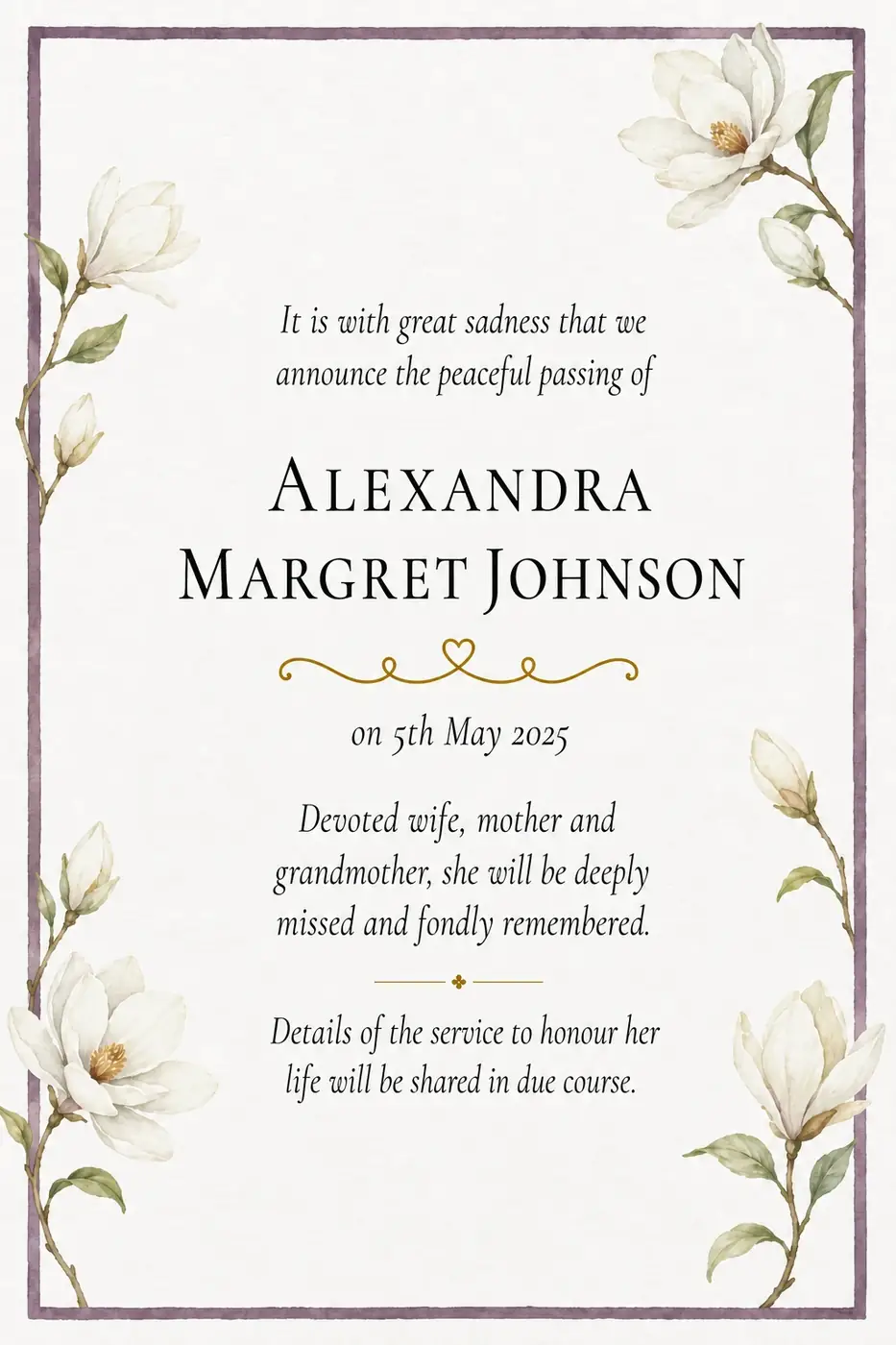
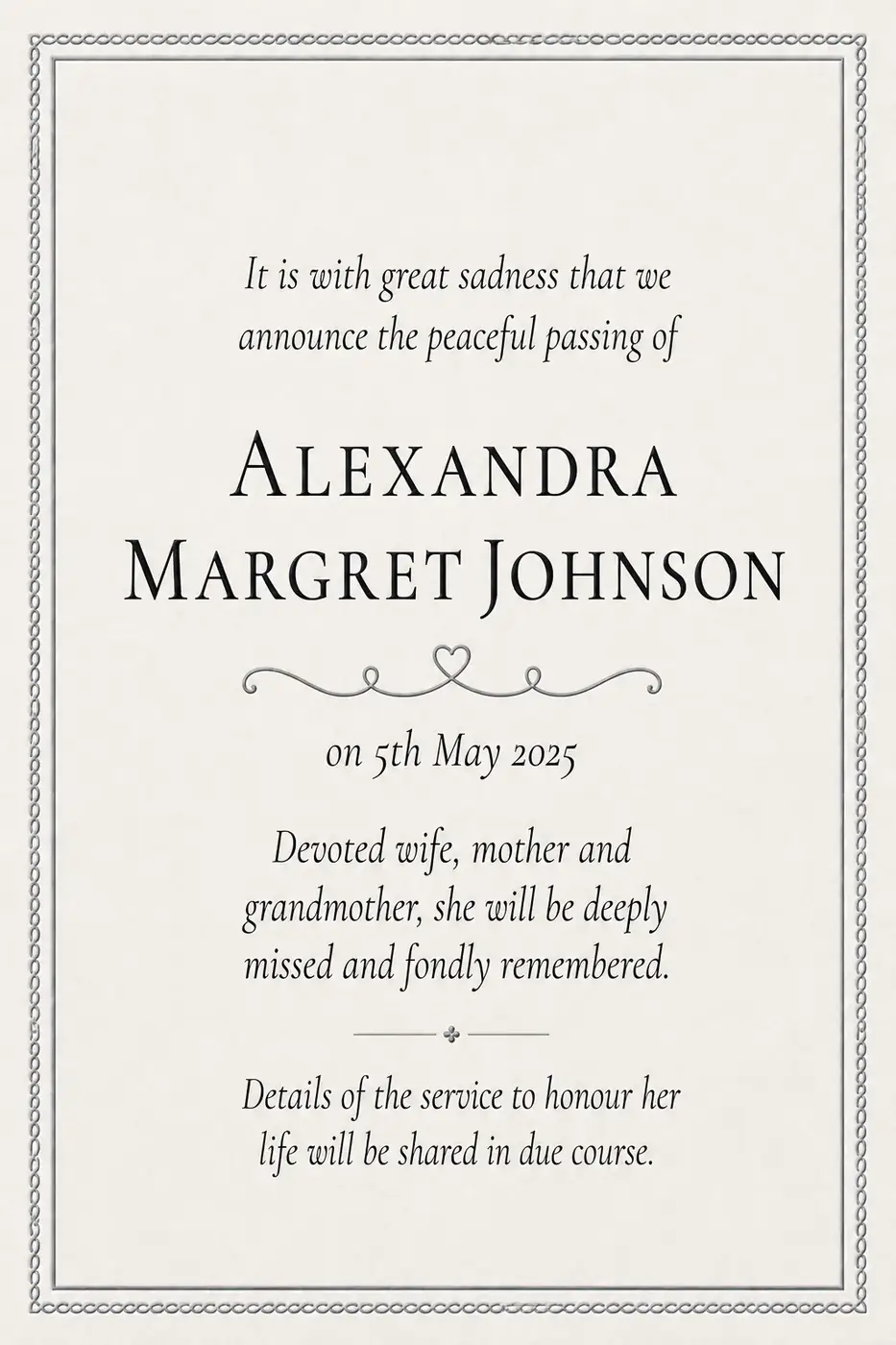
A first notice should feel fitting before a photograph is ready.
At this early point, a photograph can be too much, too soon. Many families do not yet know which photograph feels right. Some do not have one to hand. Some simply are not ready.
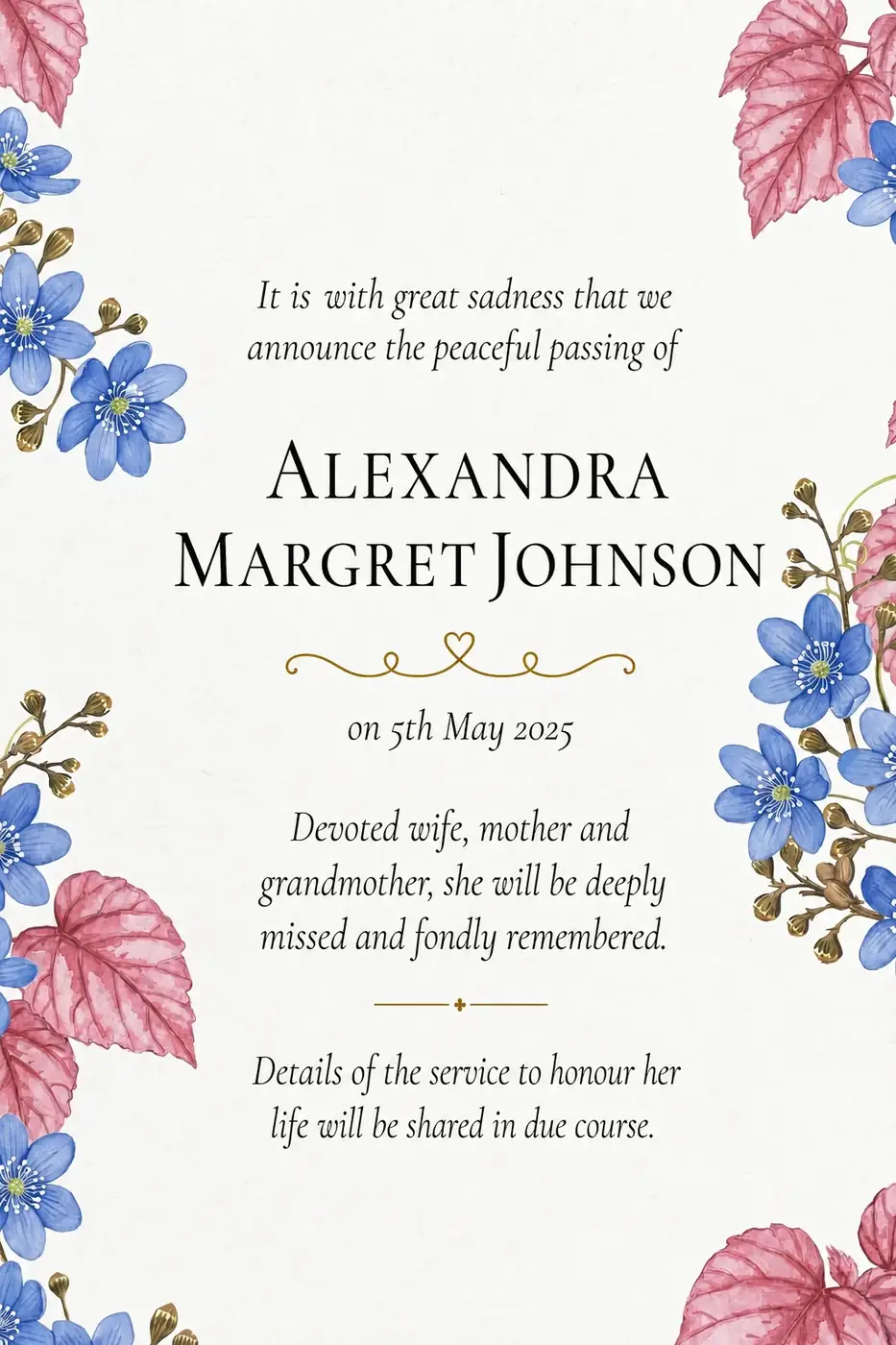
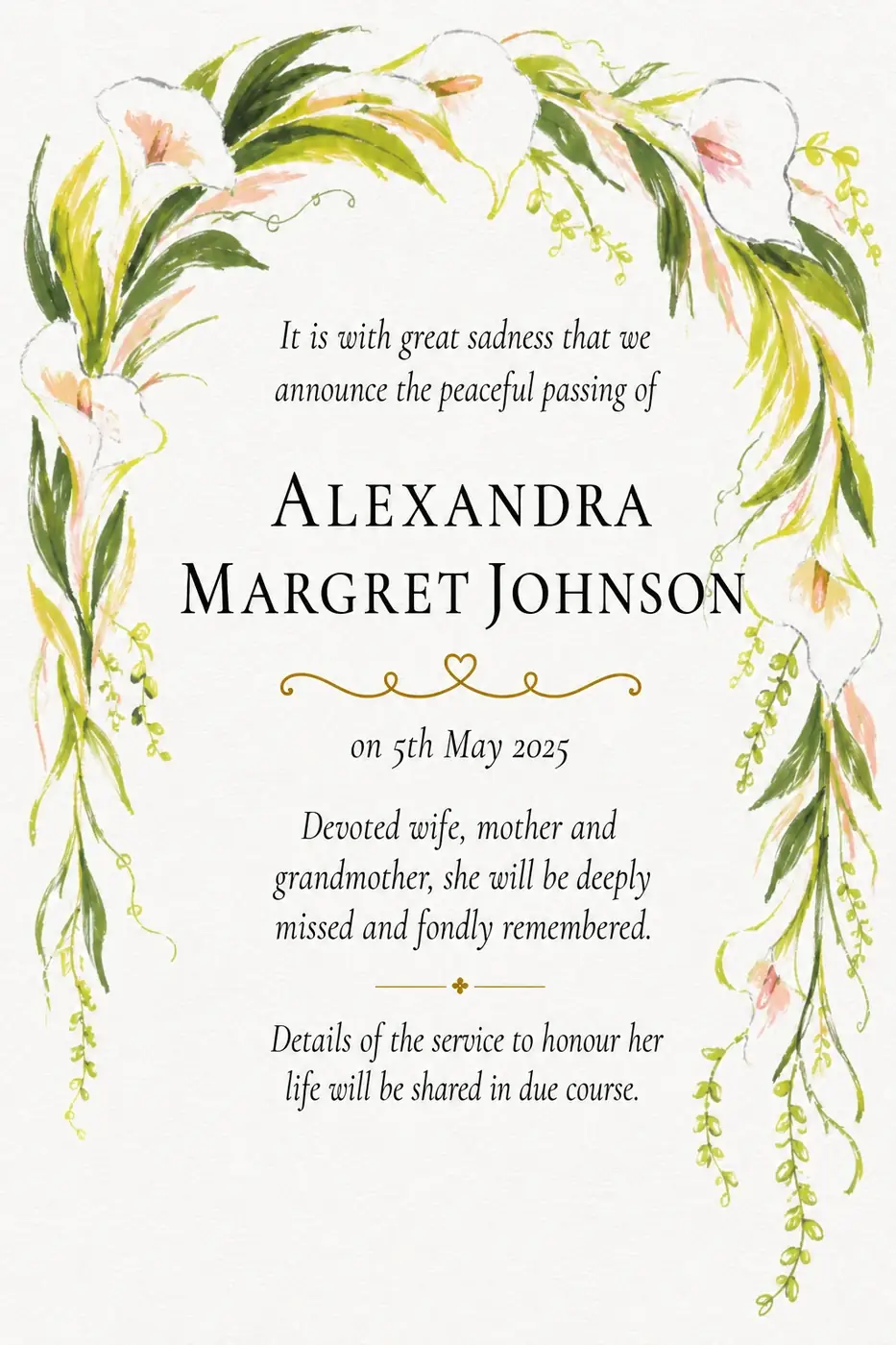
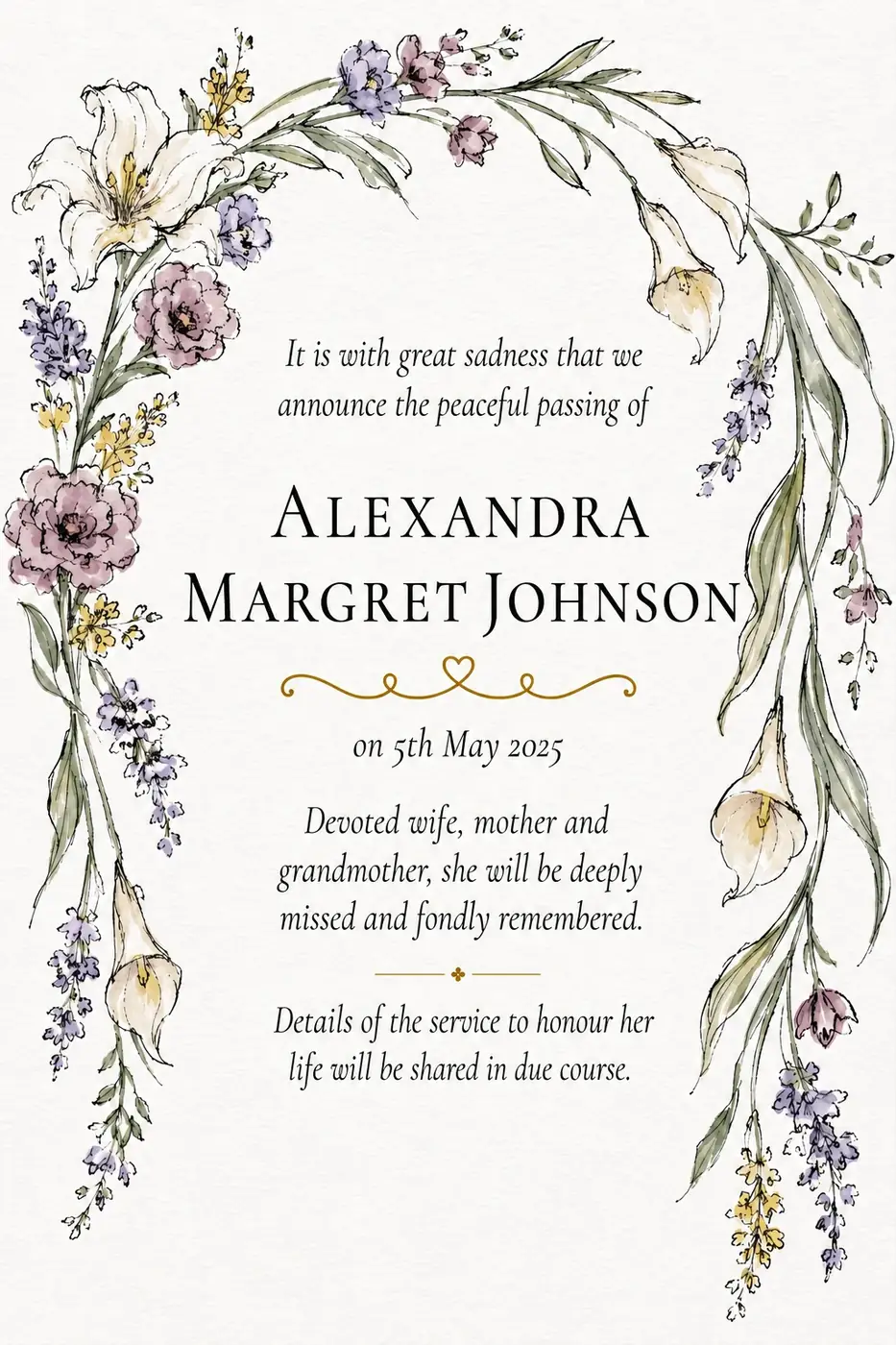
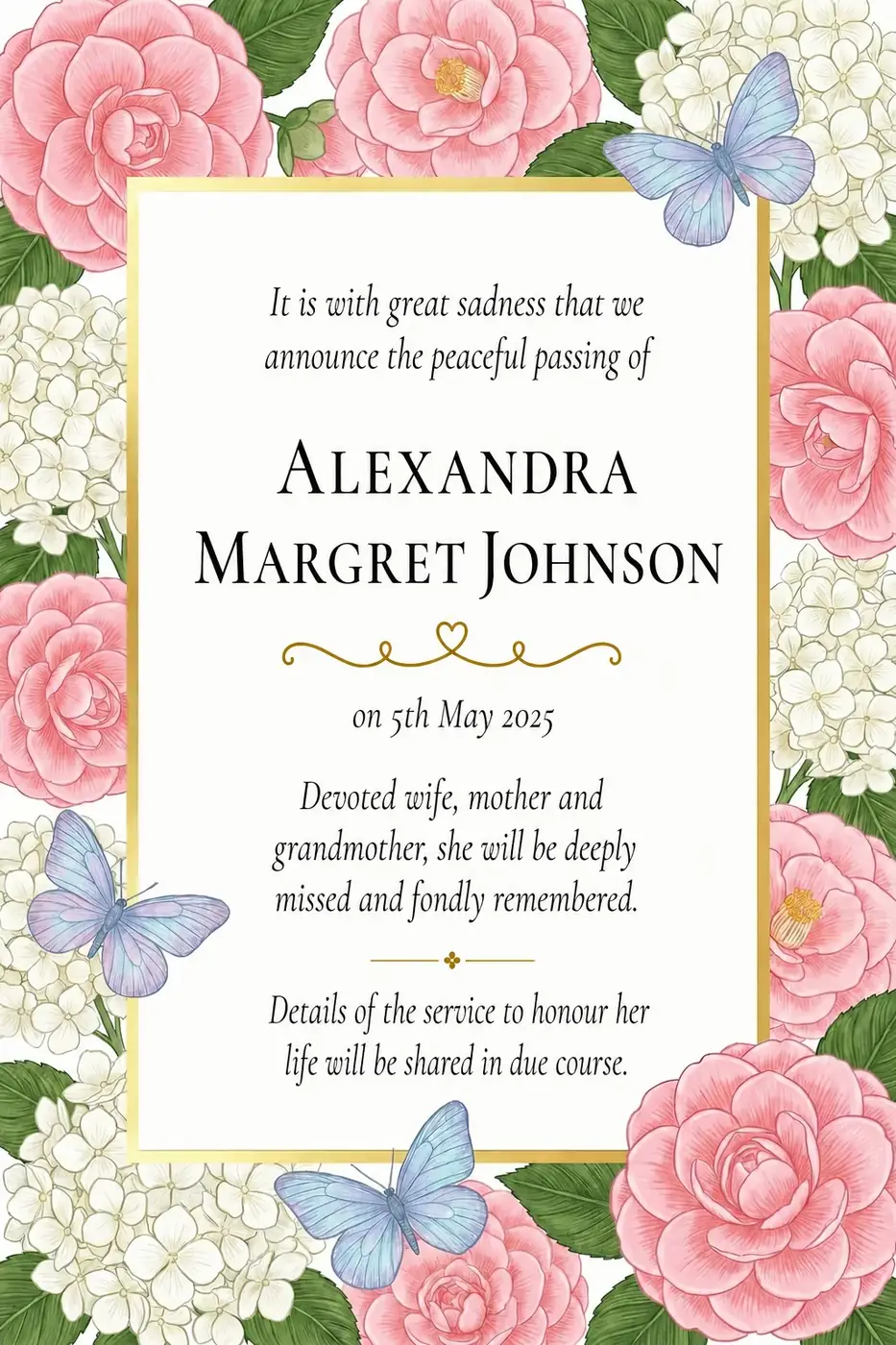
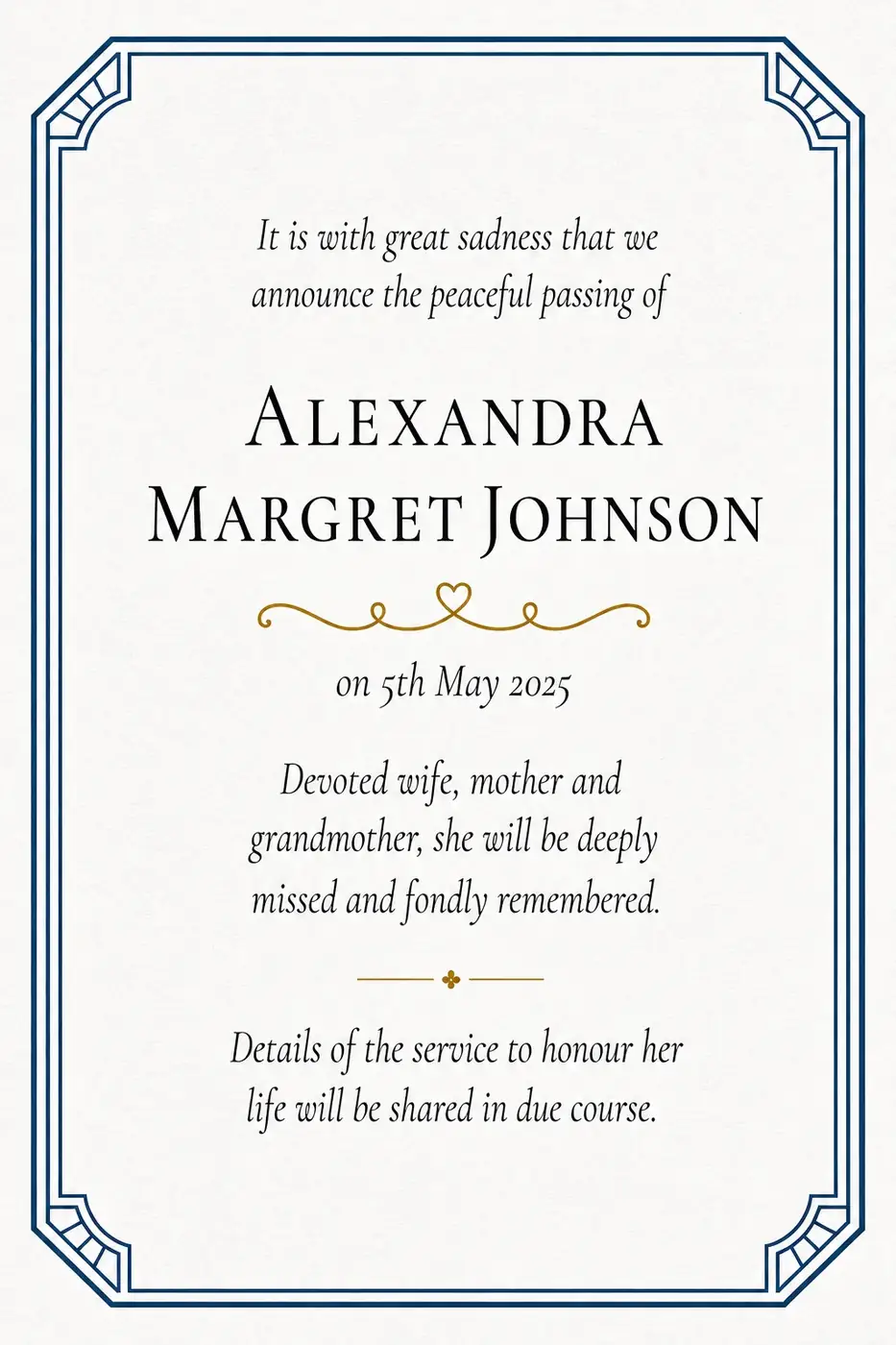
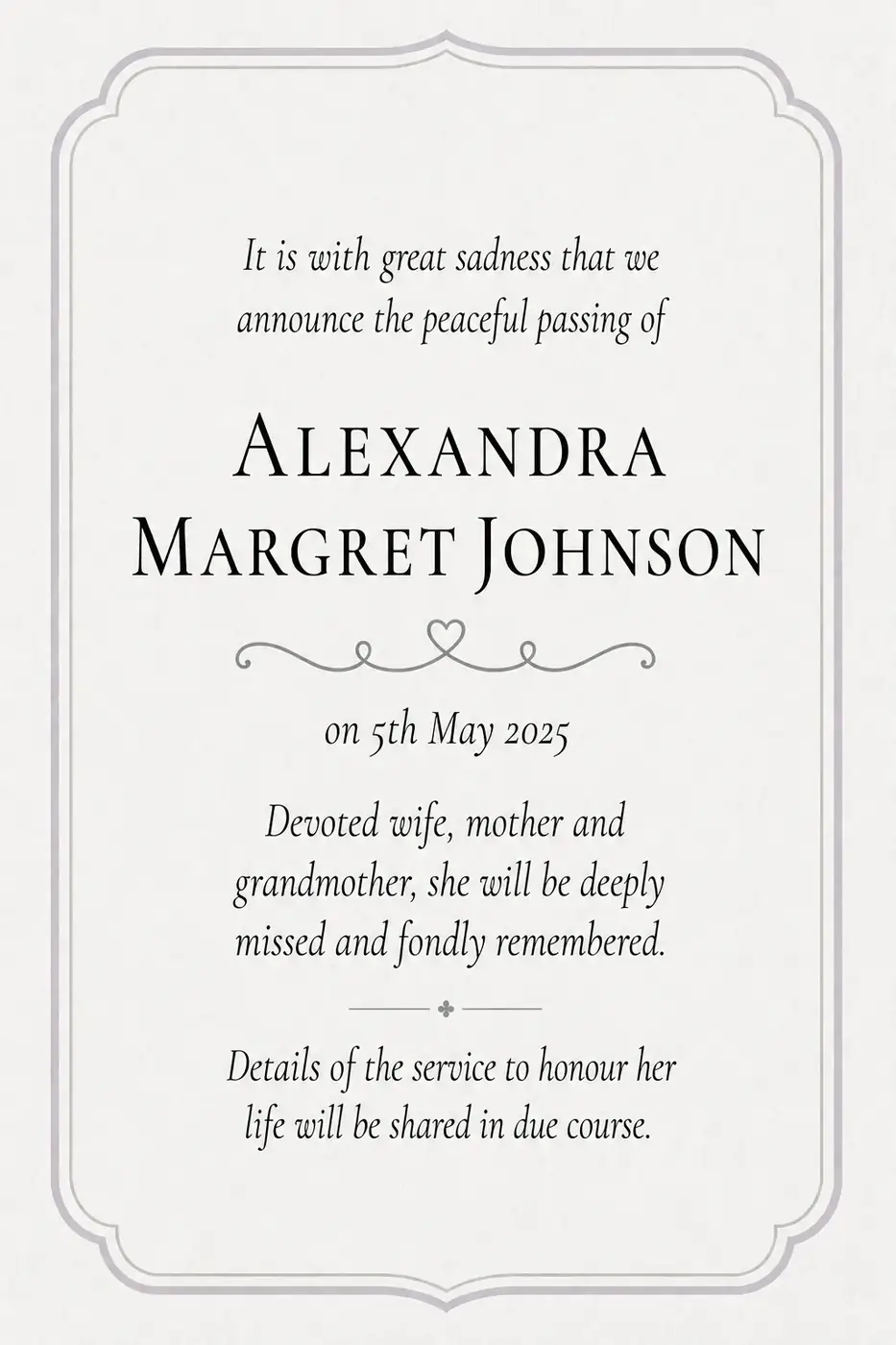
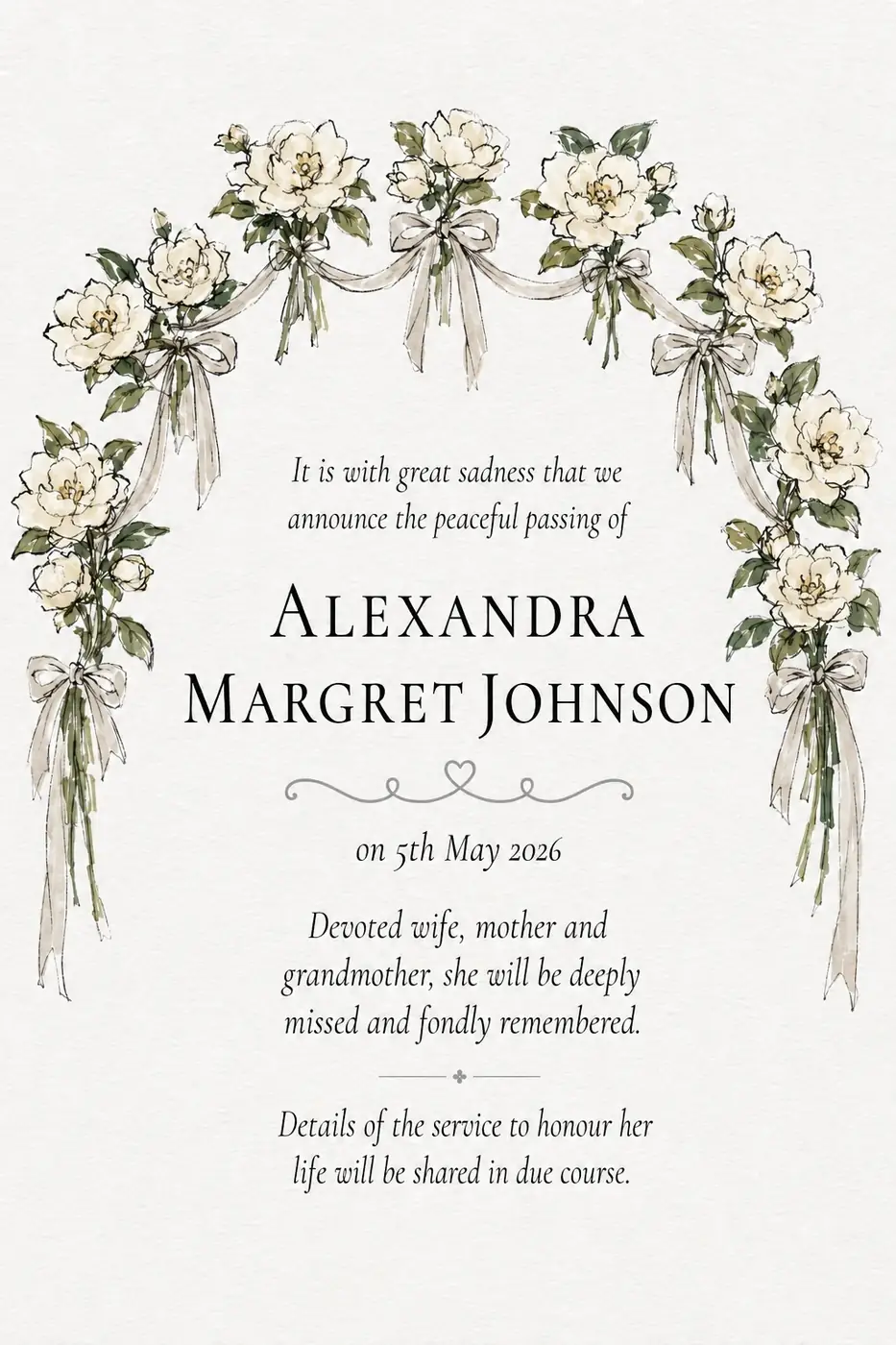
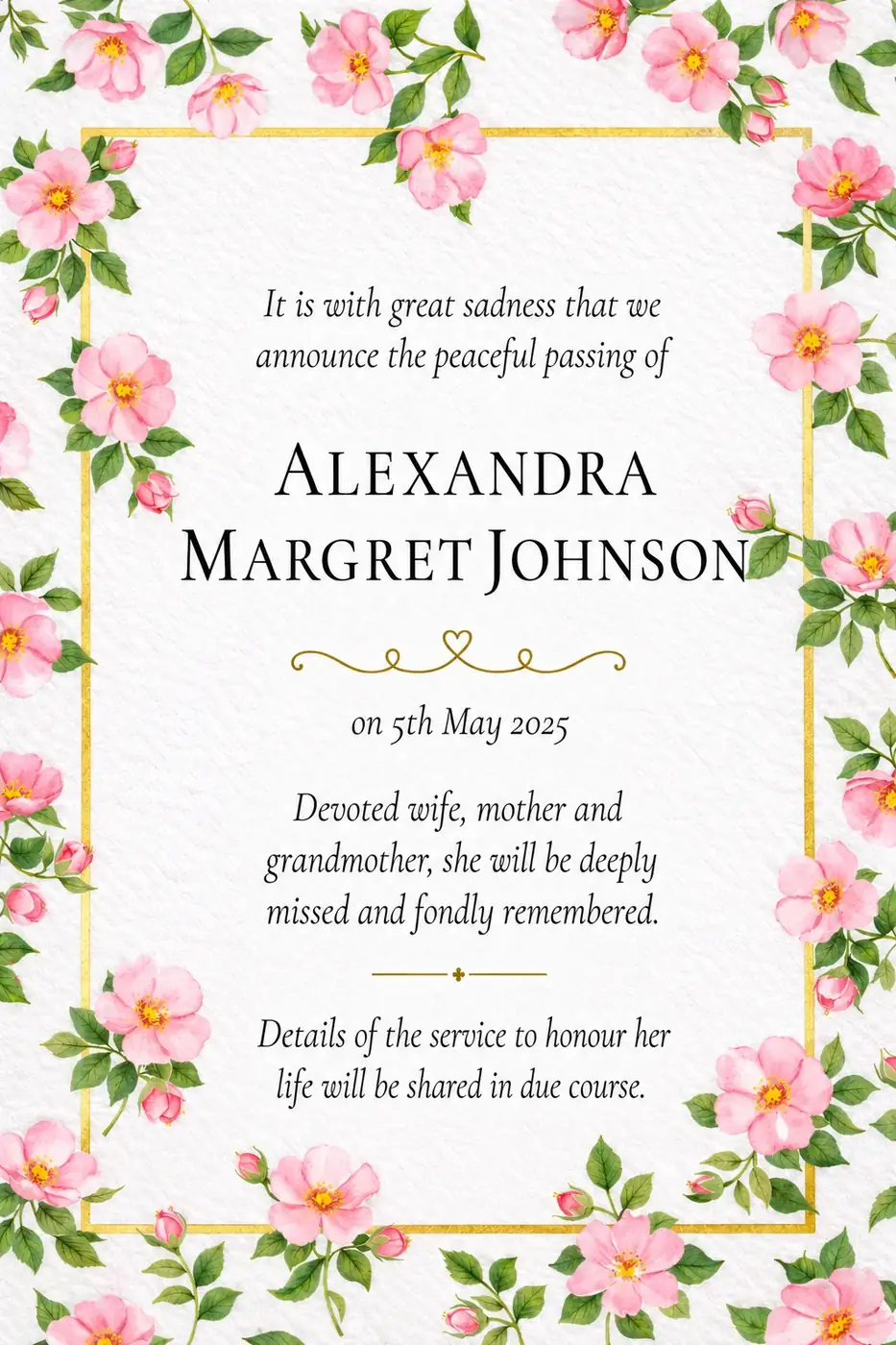
That is why ohu begins with carefully designed frames.
The notice carries the name, dates and family words inside a frame that feels appropriate for the person and the family. Later, when people are ready for photographs, memories and the fuller story, the tribute has its place.
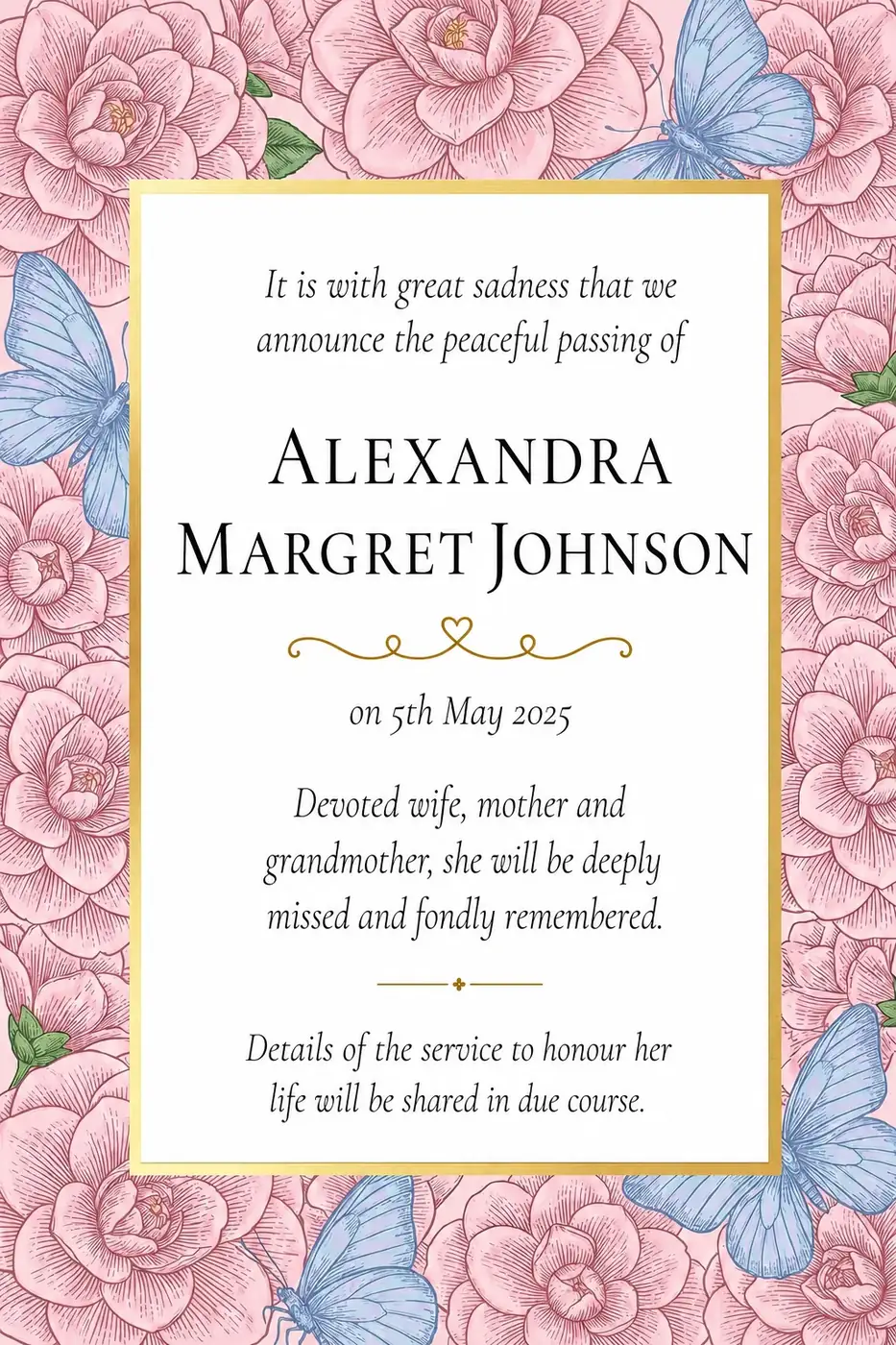
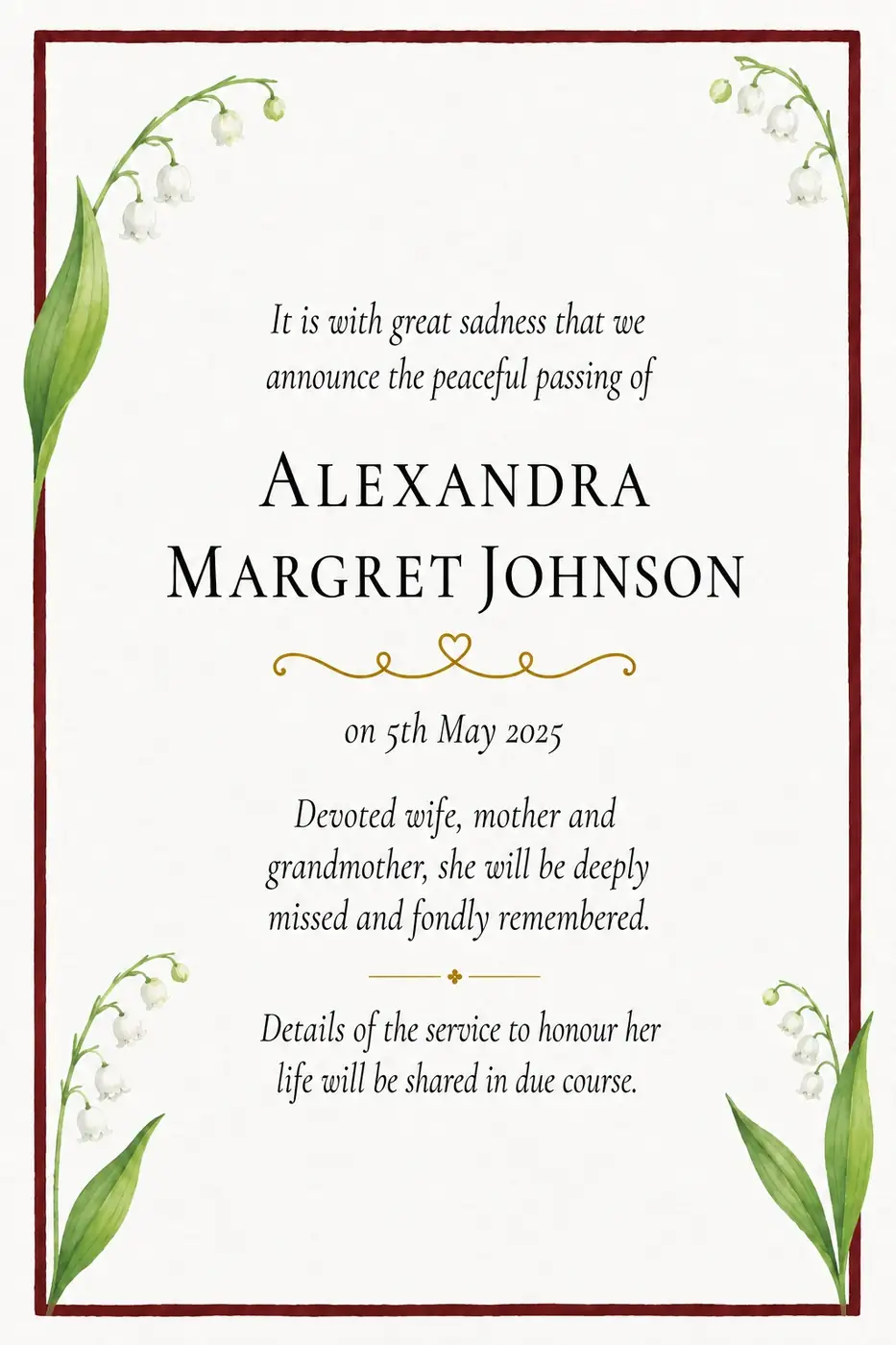
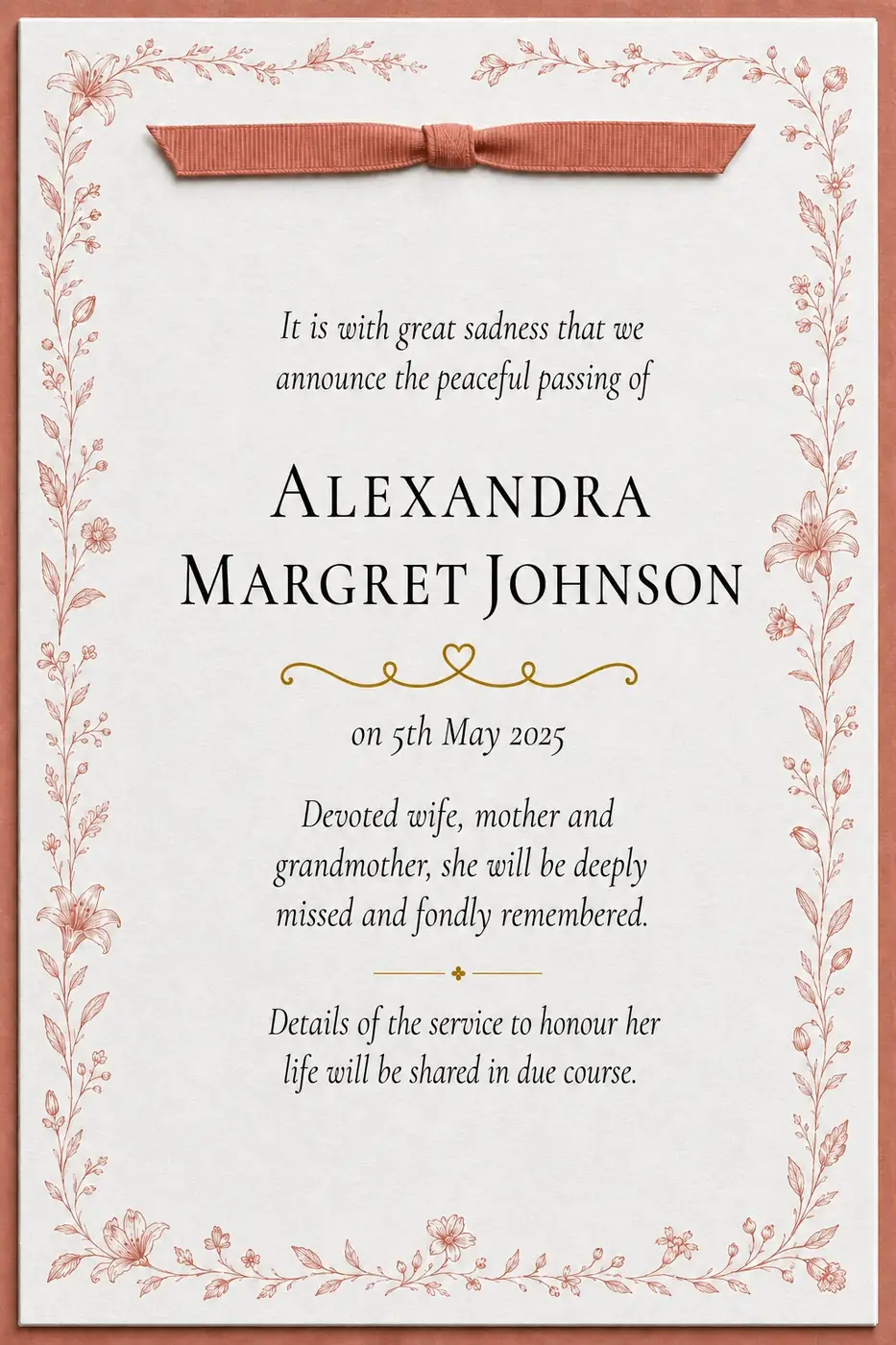
Over three years, we have built a large frame library so the first notice can feel considered without asking the family to do too much at the hardest moment.
The point is not decoration. The point is that the first message should feel cared for.
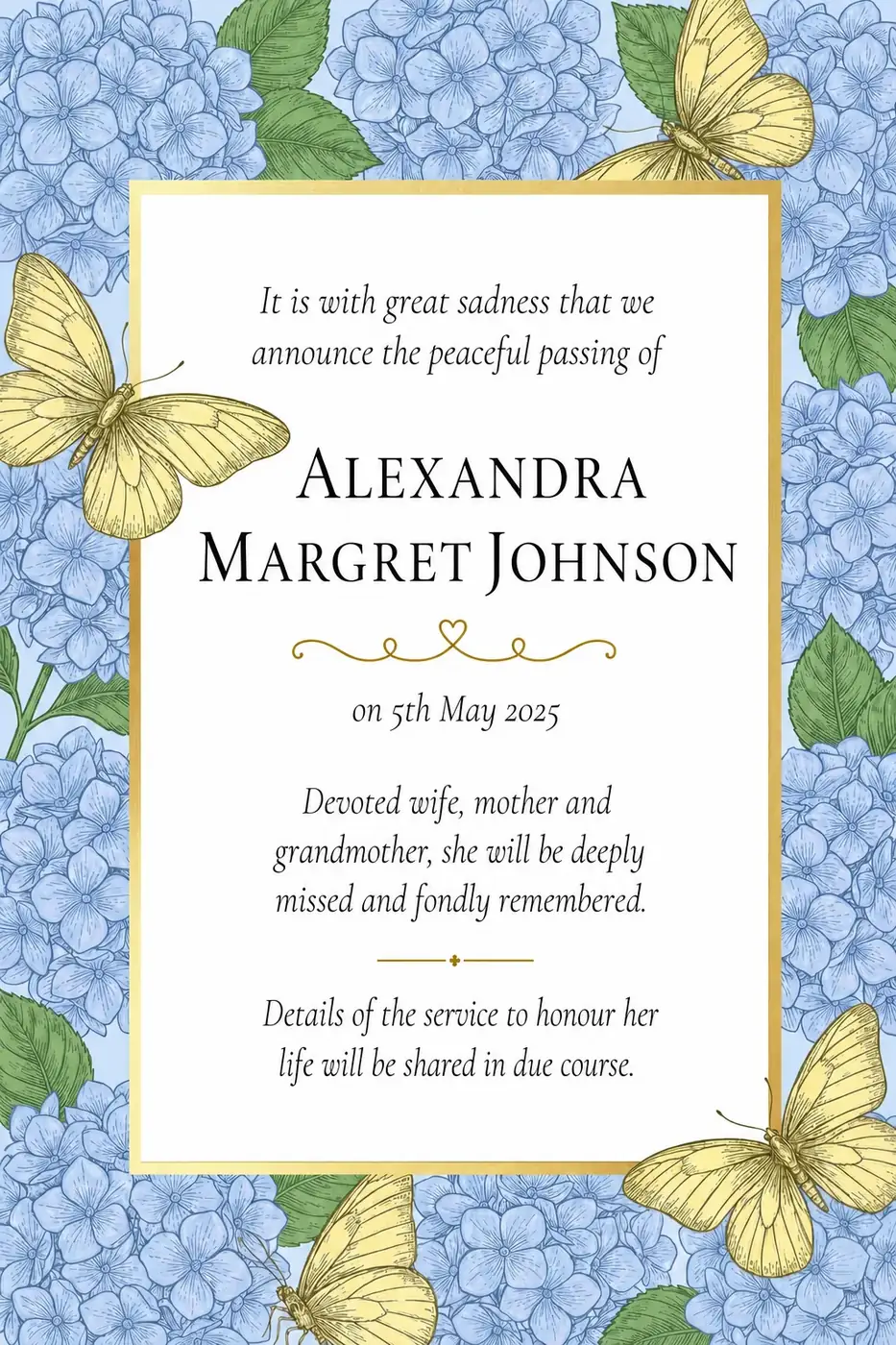
Because for the family, it is stationery.
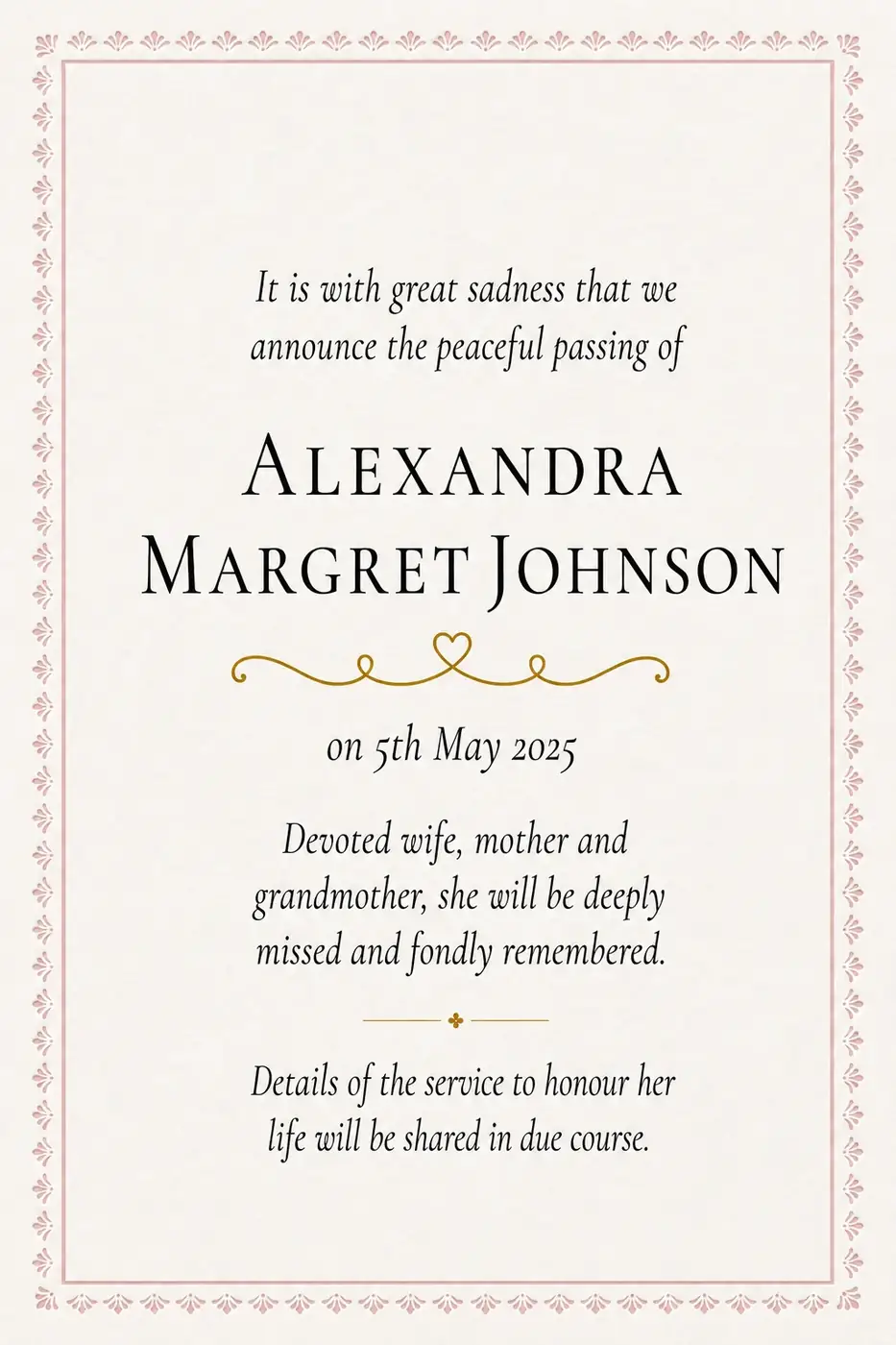
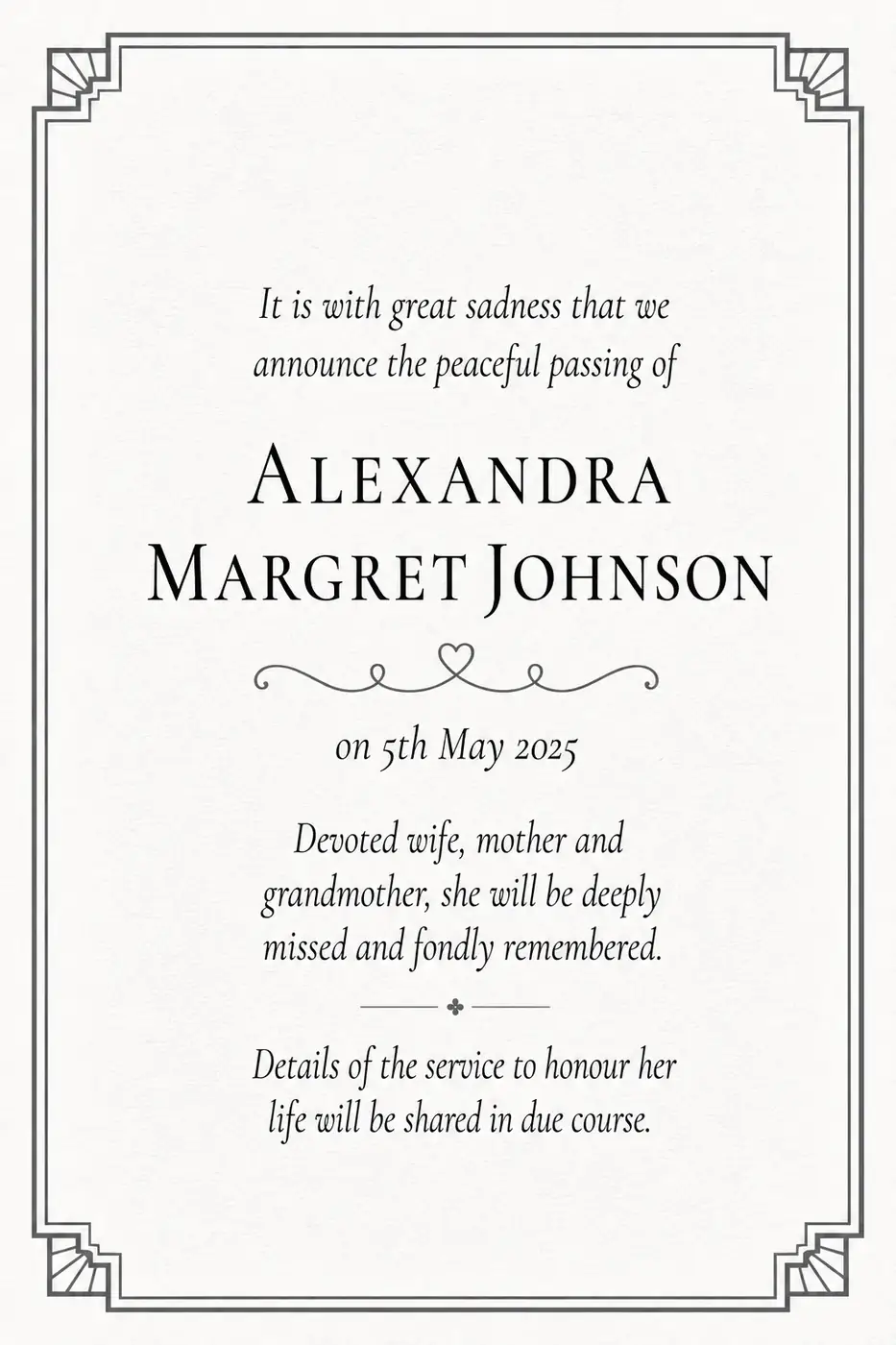
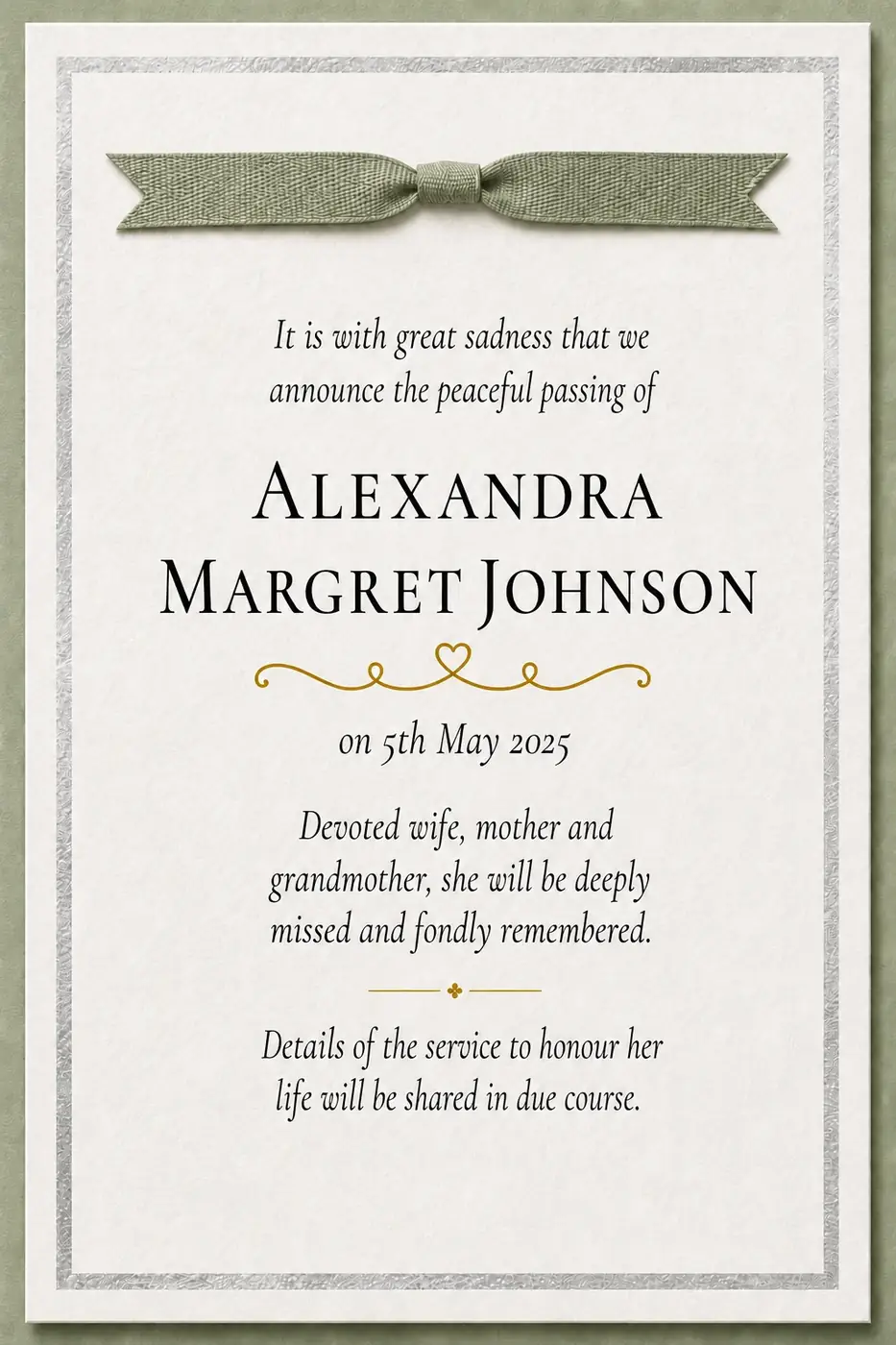
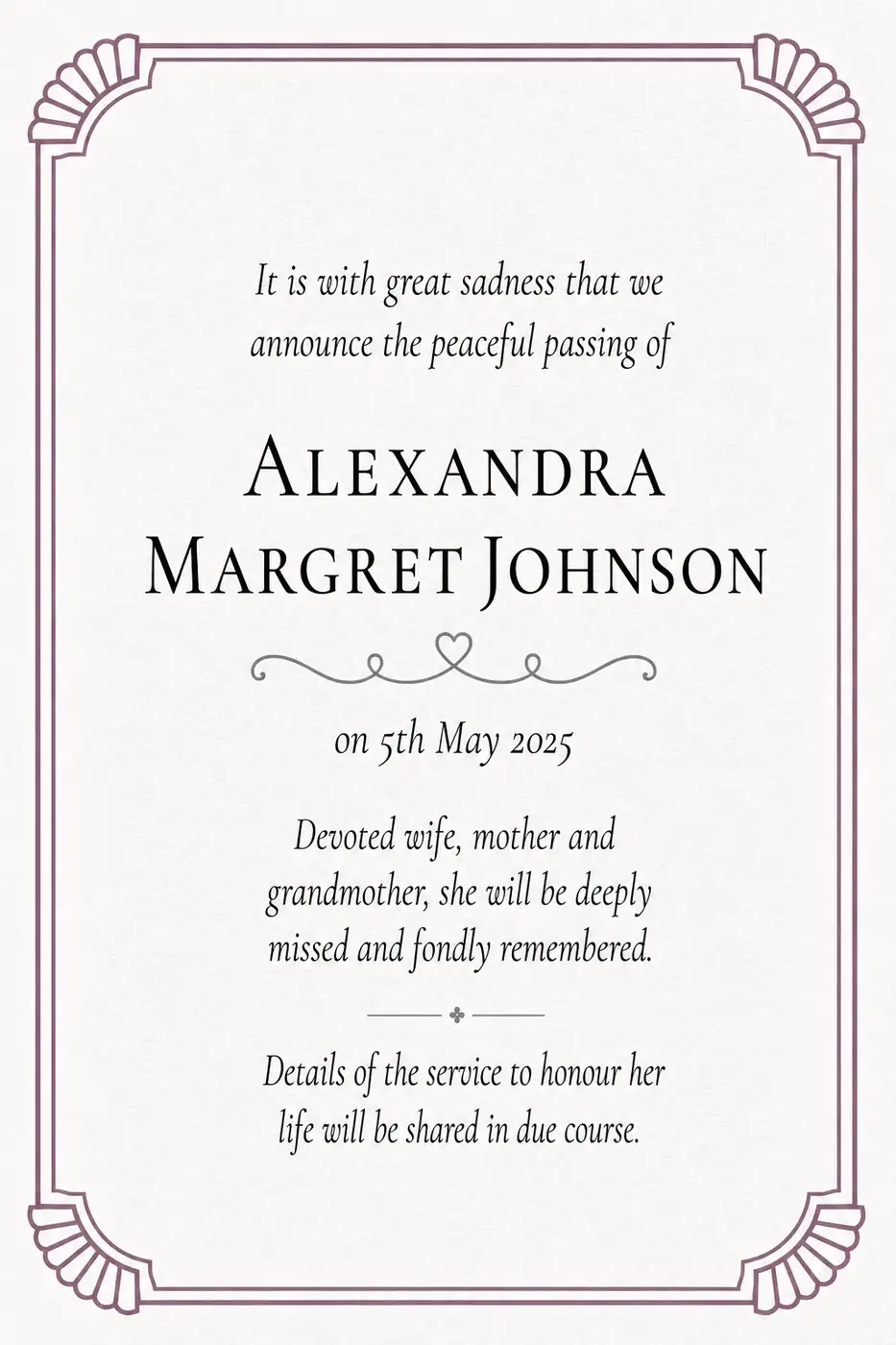
Each frame is designed with the care of printed stationery: delicate florals, considered borders, quiet typography. The family chooses the frame in moments, the words stay theirs, and every detail of the funeral sits one tap beneath the notice.
However the family chooses to remember someone, there is a frame that feels right, and your firm's name travels with every one of them.
What actually happens.
Today, families announce a death through the same tools they use to share a holiday photo, a school-group reminder or a football score.
Facebook is too public. WhatsApp is too chaotic. Group texts fall out of date the moment plans change. Email gets lost. None of these were built for the most important message a family ever sends, and the family ends up running it like a switchboard at the moment they have least capacity for it.
The arranger offers the help
The family has usually told immediate family and closest friends. The arranger explains that ohu can help them tell the wider circle clearly.
The early death notice is created
The family creates or approves a beautiful notice with the name, dates and family wording. It is free for the family, and free for the funeral director.
The closest people receive it first
The family shares the notice with the people closest to them. Those people can pass it on to others who should know.
The family can see who has been told
Because the notice is shared within one closed loop, rather than scattered across messages, phone calls and social media, nobody is missed and the family can see exactly who has been told.
Funeral details are added later
When the date, venue, reception, webcast, donation page or tribute is ready, the same circle can be updated from one place.
The part families are left to manage themselves.
In most UK funerals, the funeral director looks after the funeral itself. The wider announcement and the fortnight of family communication usually sit with the family.
In most UK funerals, the funeral director is responsible for arranging and conducting the funeral itself. That is the work families rightly trust you to do.
But the announcement of the death, and the fortnight of communication around it, usually sits somewhere else. It sits with the family.
They make the first phone calls. They tell the people closest to them. They ask others to pass the news on. They try to remember old friends, neighbours, former colleagues, church friends, club members and distant relatives. They answer the same questions again and again. They guess how many people may come to the service, the committal, the wake or the reception. And afterwards, they often do not know everyone who came, wrote, donated or helped share the news.
That is not a criticism of funeral directors. It is simply the way the system has grown up. Funeral directors may help with a notice on their website, a tribute page, a newspaper announcement or donation information, but they are not usually the people directly managing the family's wider announcement network. Nor should they have to become that.
ohu has been built for that missing layer. It gives the family a private organiser view around the notice: who has been told, who has been added, who has shared the notice on, who is coming to each part of the funeral, and what private messages have been sent. It gives them one calm place to hold the communication that would otherwise be scattered across phone calls, WhatsApp, Facebook, texts, email and memory.
This is not social media. There is no public feed, no performance of grief, and no expectation that the family should reply publicly. It is a private coordination tool for the people who need to know.
For the funeral director, the boundary stays clear. Your firm remains responsible for the funeral arrangements, exactly as today. ohu supports the family with the communication layer around the early notice, updates, RSVPs, private messages and optional cards. The family remains in control of the circle. Your arrangers are not being asked to manage a guest list, chase replies, organise a wake, moderate messages or become a family switchboard.
The benefit is that the family is less lost, and the funeral is less surrounded by guesswork. When a family can see who has been told and who is likely to attend, the practical decisions around seating, venue planning, catering and later thanks become calmer and better informed.
Who has been told
A clear view of who has received the notice, who has been added, and where the family may still need help reaching friends, colleagues, neighbours or relatives.
Who is coming
Replies by event, not just one headline number. The family can see responses for the service, committal, wake, reception, viewing or livestream where relevant.
Private messages and later thanks
Friends and relatives can send private words to the family, and afterwards the family has a clearer record of who came, who wrote, who donated and who may need to be thanked.
ohu always works alongside the partners your firm has already chosen, and never replaces them. We do not provide funeral notices, tributes or donation pages ourselves. Where a firm already uses a partner such as MuchLoved for donations, tribute content or funeral details, that partner remains the source of it, exactly as today. Where something overlaps, such as RSVPs, we look to work with the partner to improve what they already offer. ohu simply introduces it earlier, from the first private notice, and helps the family's wider circle find it at the right moment.
The family gets one calm starting point. The funeral director keeps the relationships and workflows they already trust. The partner gets earlier visibility. ohu fills the private communication gap around it.
ohu sits before your existing notices, tributes and donations.
wherever the family shares it
ohu is not another destination competing with your funeral notice, tribute page or donation partner. It sits earlier, when the family first needs to tell people.
The early death notice helps gather the wider circle before the funeral details are ready. Then, when the family is ready, that same circle can be guided naturally towards the services you already provide.
Funeral notices
The funeral notice is stronger when the right people already know where to look.
Tributes and donations
The tribute and donation page arrive when people are ready for the fuller story, photographs and memories.
Your branch and your care
The family's circle sees your firm helping early, before the funeral itself has taken shape.
Your firm is remembered because it helped.
This is the opposite of advertising.
Your firm's name is attached to a useful act of care: helping the family tell people properly at the moment they most need clarity.
That notice may be seen and shared across the wider funeral circle: family, friends, neighbours, colleagues and people who may not visit your website until much later, if at all.
They are not seeing a banner advert. They are seeing the firm that helped the family hold things together.
For the arranger, the handover should take no more than a couple of minutes. For the family, the service is free. For your firm, it creates an earlier, more useful place in the journey.
Not visibility bought through advertising. Presence earned by helping.
That is the simple version.
ohu gives funeral directors a generous first act of care: a free early death notice that helps the family tell people gently, see who has been told, and keep everyone updated until the funeral details are ready.
That is enough to understand the idea.
The fuller introduction below is for owners, boards, IT, legal, data-protection and management teams who want to understand why we built it carefully, what founding partners receive, and what due-diligence material we can provide.
Why we built it hard, not fast.
Most startups are encouraged to launch the minimum version and learn. We chose not to do that.
This is not a casual sharing tool. It touches bereaved families, sensitive messages, recipient data, funeral workflows, partner reputations and a very short window where mistakes matter.
So we built the hard parts first.
For three years, we focused on the parts that are easy to underestimate: closed sharing, family permissions, recipient experience, notice design, arranger handover, auditability, data protection, message governance, resilience, support and the practical reality of how funeral directors work.
That took longer than a fashionable minimum viable product. It also made the product much more valuable.
A family should not feel like they are testing unfinished software. A funeral director should not feel like they are lending their name to an experiment. ohu has been built to feel simple on the surface because the complexity has been handled underneath.
The family sees a simple notice. The funeral director needs to know the difficult parts have already been taken seriously.
Built for the family
A calm experience at a moment when blank screens, repeated messages and missing people make everything harder.
Built for the arranger
A two-minute handover that fits beside the conversation about notices, tributes and keeping people informed.
Built for the firm
A service designed with privacy, resilience, support, governance and partnership review in mind from the beginning.
We are not giving this away because we cannot charge for it. We are giving it away because charging the family at this moment would damage the trust that makes the help valuable.
A lifetime thank you for the firms who help us get this right.
We are choosing a small number of leading UK funeral directors to work with us in the early days of ohu: firms whose judgment we trust, whose arrangers understand families, and whose honest feedback will help us shape this into something the sector can rely on.
The invitation is not about buying software early. It is about helping shape a new moment in the funeral journey before it becomes widely available.
In return, founding partners receive a written commitment that the core services ohu currently provides free to funeral directors and families remain free to those founding partners for the life of the service, subject to the specific terms agreed between us.
Everything ohu currently provides free to funeral directors and their families stays free, for founding partners, for the life of the service.
The core announcement service, the arranger dashboard, event management, RSVPs, digital messages, FAQs, co-branding, notice pages and sharing, together with every improvement we add to the free service over the years ahead. As some of these services move to paid tiers for firms joining later, founding partners are guaranteed, in writing, that they will not.
What founding partners receive
The announcement service
Creating, styling and delivering the early death notice. Recipient management and a clear view of who has been informed.
The arranger dashboard
The tool your arrangers use to set up a notice in a couple of minutes and hand over. All enhancements included as they arrive.
Events & RSVPs
Services, wakes, receptions, viewings. Three attendance types and full RSVP tracking with real numbers for catering and logistics.
Updates & sharing
Real-time updates to every recipient when plans change, plus controlled sharing that widens the circle without losing control.
Digital messages & FAQs
Private in-app messages from recipients to the family, and a single place to answer the questions guests always ask.
Co-branding
Your firm’s name and logo on every screen the family sees, carried with care across the whole fortnight of coordination.
Priority onboarding & named contact
White-glove setup, brief arranger training, and a named partnership contact who responds within the working day.
Roadmap input
A direct voice in what we build next. Feature requests from founding partners are prioritised above other sources.
All future free-tier features
Anything we add to the free service in the years ahead is guaranteed to stay free for founding partners.
What we ask in return
- Offer ohu to a small number of suitable families in the early months, at the family's discretion.
- Honest feedback from your arrangers. Criticism early, not politely late.
- A named arranger champion as our day-to-day contact.
- Two short calls in the first month.
What we explicitly do not ask
- No up-front fee, ever, for founding partners.
- No integration work. We do the technical setup.
- No exclusivity. You may work with any other supplier.
- No marketing obligations and no minimum volume.
The questions larger firms are right to ask.
The first answer is simple: ohu helps the family tell people gently, see who has been told, and keep everyone updated. But larger funeral directors also need the second answer: how the service is governed, supported, protected and reviewed.
This section is for owners, boards, legal, IT, procurement and data-protection teams. It keeps the practical questions in one place so the first introduction can stay simple, while the detail remains available for anyone who needs it.
What is the founding partner phase?
The founding partner phase is a structured period of working with a small number of funeral directors before wider release.
ohu has been built around one specific job: helping families make an early death notice and keep people aligned during the fortnight of communication that follows. The founding partner phase is about refining how that service fits into real funeral-director workflows, branch routines, governance requirements and family conversations.
This is not about testing an unfinished idea on families. It is about taking a carefully built service and shaping it with the firms who understand the realities of bereavement care.
Why are you starting with a small number of firms?
Because the quality of early feedback matters more than volume.
We want to work with firms who will tell us honestly where the product is useful, where the wording needs changing, where the workflow should be lighter, and where corporate governance needs more detail.
The aim is not to roll out fast. The aim is to reach proper product-market fit in a sector where trust, timing and tone matter.
What are you looking to learn from funeral directors?
We are looking to learn the things that only become visible in practice.
How arrangers naturally introduce the service. Which parts families understand immediately. Where a branch needs more control. What legal, IT and data-protection teams need before approving wider adoption. Which features reduce questions and which create them.
That feedback directly shapes the product and the partner model.
What does success look like in the first few months?
Success is practical, not abstract.
A family can share a private death notice without chasing dozens of separate messages. People who should know are less likely to be missed. Updates reach the right circle when details change. RSVPs and questions are easier to manage. Arrangers can introduce the service without it becoming another administrative burden.
For the firm, success means the service feels useful, safe, well-governed and easy to explain.
Success also means your firm is present earlier, and with more of the people who matter. Because the family shares the notice and their circle passes it on, your firm reaches an early, natural link with people who have not yet chosen a funeral director, long before they ever need one.
And it means your firm is woven into the wider experience around the funeral: the hundred or more friends, colleagues and relatives who gather around each death see your name and your care throughout the fortnight. Not as advertising, but as the firm that looked after someone well.
What do you need from a founding partner firm?
We ask for a light but thoughtful working relationship.
A named contact. A small number of suitable families offered the service when appropriate. Honest feedback from arrangers. Short review conversations in the early weeks. A willingness to let us learn from the details rather than only from the headline outcome.
We do not ask for exclusivity, minimum volumes, branch-wide rollout, integration work or marketing commitments.
How will our feedback be used?
Directly and visibly.
We will keep a clear product and operations backlog from founding partner feedback. Where something changes because of a partner's input, we will say so. Where we cannot make a change, we will explain why.
The point of the founding phase is not to collect polite endorsements. It is to make the service better.
What does ohu actually do?
ohu helps a family create a private, beautifully presented death notice and keep people updated in the days that follow.
It can hold funeral details, reception information, directions, livestream links, tribute links, charity or donation information, RSVPs, guest questions and digital messages. Recipients can also send a physical card if they want to, with ohu handling design, print and post.
The service is deliberately focused on the communication layer around the early notice and the immediate coordination period.
What problem is ohu solving?
Families now often announce a death through the same tools they use for everyday life: WhatsApp, Facebook, text messages and email.
Those tools are familiar, but they were not designed for bereavement. Information fragments quickly. People are missed. Plans change. The family ends up answering the same questions repeatedly at the point when they have least capacity.
ohu gives the family one calm place for the notice, the details and the updates.
How does ohu sit alongside existing notices, tribute pages and donation routes?
ohu sits earlier in the journey.
Your newspaper notices, website notices, tribute pages, charity links and donation pathways continue as they are. ohu helps the family's circle find those existing services at the right moment, through the private notice and update flow.
The firm's existing choices stay intact. ohu makes them easier for the right people to reach.
Is the core service really free?
Yes.
The announcement service, event details, RSVPs, updates, digital messages and core family experience are free to use. This is not a free trial and not a limited teaser.
The free service has to stand on its own. That principle is already central to our freemium thinking: the core product must be genuinely useful without needing a paid upgrade to make it work.
How does ohu sustain itself commercially?
We charge for one thing only: the optional, beautifully printed condolence cards that a friend, colleague or relative may choose to send. Nothing else is ever charged for.
Everything the family and the funeral director use is free, and it is built to be genuinely complete. Announcing, gathering the right people, holding the details, keeping everyone aligned and sending digital messages all work in full, for free, every time. There is no paywall, no upsell, and no tier to reach first.
This is the freemium model, in the same shape as Google Maps or Zoom. The free service has to be so good that nobody ever needs to buy anything to make it work properly. That is the only way freemium works well, and it is also what makes it spread: a family looked after well recommends the service, forwards the notice, and uses it again, with no cold marketing and no selling asked of you.
We researched this market in depth and are convinced this is the right model for the funeral sector. Only a small fraction of people ever think of buying a card, and the few who do are relieved it is so simple, because it is something they wanted anyway. That small minority quietly sustains the service for everyone else, and the great majority are never asked for a penny.
How do physical cards fit into the experience?
Physical cards are an optional way for friends, colleagues and relatives to send something tangible.
They are not required for the notice, the event details or RSVPs. They sit quietly alongside the free service for people who want to send something more considered than a text message but do not know what to choose or write.
ohu handles the design, wording support, printing and posting.
How does the contact expansion work?
The family starts with the people they know should be told.
Recipients can then suggest others who may need to know: old colleagues, neighbours, club members, distant relatives or friends from earlier parts of the deceased's life. This helps close the gaps that often appear when a family is trying to remember everyone under pressure.
The family remains in control of the notice and the circle around it.
What happens when funeral details change?
The family or authorised arranger can update the notice once.
Everyone already included in the notice receives the updated information through the same private channel. This avoids the usual chain of repeated calls, forwarded screenshots and out-of-date group messages.
This is particularly important when dates, times, venues or livestream details change.
How would an arranger introduce ohu to a family?
As part of the normal arrangement meeting, in language that fits naturally with how arrangers already help families share the news.
For example:
"I can now give you Sarah's death notice. It sits alongside phone calls, conversations in person and any newspaper notice, and it can be shared by friends and family, so the right people hear directly and nobody is missed.
It also gives everyone one clear place to return to for the details and any updates over the next fortnight. That helps you see who has been told and gives you a better sense of how many people are likely to come to the funeral and the reception or wake.
We would usually begin with the immediate family, who already know, and they can then help share it with their own contacts."
How much extra work does this create for the arranger?
The product is designed so the arranger's role is light.
The arranger sets up the notice, checks the key details, applies the right presets and hands control to the family. The service is not intended to create a second administrative system for the branch.
During the founding partner phase, one of the things we want to measure carefully is whether the setup feels light enough in a real arrangement environment.
Does ohu need to integrate with our existing systems?
Yes. ohu is designed to reduce time and effort for arrangers by using an API to pull simple standard information that has already been captured in your funeral management software.
This avoids unnecessary re-entry of details, reduces repetition and errors, and saves time for both your arrangers and the family. The result is a quicker, lighter setup process built around information your team is already capturing as part of the normal arrangement workflow.
How is our firm presented to the family?
ohu is presented as a specialist service your firm has chosen to offer free to bereaved families to help ensure nobody is missed and to make communication around the funeral easier to manage.
Your firm's name, details and branding remain central throughout the family experience. ohu is clearly identified as the specialist provider of private, targeted death notices and ongoing communication, while the funeral director remains the lead throughout everything around the funeral.
This is intentionally different from wider channels such as local and national newspaper notices. Those channels are designed for broad reach. ohu is designed for focused, private and ongoing communication with the people who should see the notice and any later updates.
Who supports the family if they need help?
ohu supports the family with the notice, messages, RSVPs and cards.
Your arrangers remain focused on the funeral arrangement itself. We do not want branches carrying product-support questions that should sit with us.
During the founding partner phase, every participating firm has a named ohu contact and a clear route for support.
What if a family is not confident online?
ohu supports the family's communication. It does not replace personal calls or other ways of telling people about a death.
Often a younger relative will manage the notice and updates for the wider family. This helps keep everyone aligned, gives people the same answers to common questions, and helps the family manage communication and likely attendance over the fortnight.
How has ohu been built from a security perspective?
ohu is being built with enterprise-software discipline from the start.
The family business behind ohu has more than 25 years' experience working with the funeral sector and the NHS, and over 20 years delivering outsourced services for major UK banks, including large operational contracts at the scale of more than 500 people.
That background matters. It means security, process, access control, auditability, resilience and governance are not being added late. They are part of the way the service is being built.
Where is the data stored?
ohu is cloud-hosted, with hosting and governance designed around UK and European expectations.
For corporate partners, we provide details of hosting arrangements, data regions, sub-processors and transfer safeguards as part of the due diligence pack.
The important principle is that cloud hosting does not mean loose governance. Data location, supplier access, retention and controls are all documented.
Who is the data controller?
For the ohu service layer, ohu acts as an independent data controller.
That means ohu takes responsibility for the privacy notices, data rights, retention, recipient communications, PECR controls, supplier governance and service-layer processing that sit within ohu.
Your firm remains responsible for its own arrangement records and internal systems. The boundary between the two is clearly set out in the data-protection schedule.
How do you handle GDPR and PECR?
ohu handles data protection and electronic communications within the service so arrangers are not left carrying that burden.
Recipient contact details are used only for the specific death notice and related funeral communications. We do not add people to marketing lists, we do not send general marketing, and we do not use those details for unrelated commercial purposes.
Messages are limited to the notice, funeral details, updates, RSVPs and family communication. Any optional service shown within ohu is presented only in that context and does not change this position.
Will recipient data be sold or used for other purposes?
No.
Recipient details are used only for the specific death notice and related funeral communication. We do not sell them, rent them, add them to marketing lists, or use them for unrelated commercial purposes.
This is a core trust principle for ohu.
Does ohu use AI?
Yes, but quietly and with people kept in control.
AI may help suggest wording, select suitable card designs or reduce the amount of blank-page thinking a family or recipient faces. It does not approve notices, send messages on its own or make funeral decisions.
The family, and where relevant the arranger, remain in control of what is shared.
Will family or recipient data be used to train public AI models?
No.
Our position is that funeral, family and recipient data should not be used to train public AI models. Where AI suppliers are used, they are reviewed as part of our security, privacy and sub-processor governance.
What availability is ohu built for?
ohu is being built as high-availability enterprise software, with monitoring, backups and operational processes appropriate to a service that families may rely on during a short and sensitive window.
During the founding partner phase, the engineering target is at least 99% uptime. As the service moves into broader corporate deployment, formal service levels, support response times and escalation routes can be agreed.
Are you ISO 27001 certified?
Not yet.
ohu is on the path to early ISO 27001 accreditation. We will not claim certification until it has been independently audited and awarded.
In the meantime, we can share our security-control approach, roadmap and due diligence materials with partner firms.
What due diligence materials can you provide?
We can provide a due diligence pack under NDA. This can include:
- Company overview
- Security overview
- Data-flow diagrams
- Hosting and sub-processor details
- API architecture
- GDPR and PECR model
- Retention and deletion approach
- Incident response process
- Business-continuity summary
- Insurance summary
- ISO 27001 roadmap
- Support model
- Draft heads of terms
- Data-protection schedule
The aim is to make review straightforward for legal, IT, procurement and data-protection teams.
What experience do you have with large corporate environments?
ohu is new, but the operating experience behind it is not.
The business has worked with the UK funeral sector and NHS, and has over 20 years' experience delivering outsourced operations for major UK banks. That work required disciplined process, security, governance, auditability, client reporting and operational resilience at large scale.
We are bringing those standards into ohu from the beginning.
What would the heads of terms cover?
The heads of terms should be plain, proportionate and familiar to a corporate funeral director. They would usually cover:
- Purpose of the founding partner phase
- Services included
- Branches or regions included
- Responsibilities of each party
- Data protection and PECR
- Security and hosting
- Support model
- Branding and co-branding
- Confidentiality
- Restricted activities
- Commercial terms
- Live-notice continuity
- Data export and deletion
- Liability
- IP ownership
- Review points and next-step process
The document should feel like a sensible service agreement, not an over-engineered enterprise software contract.
How do you define the boundary of the ohu service?
The boundary is the communication layer around the early death notice and the fortnight of coordination that follows.
For clarity, the agreement can include a restricted-activities schedule. That schedule would confirm that ohu will not offer or broker funeral directing, funeral planning, prepaid funeral plans, flowers, probate, estate administration, legal services, financial services, insurance, CRM software or funeral case-management software.
This is not because we think the boundary is unclear. It is because putting the boundary in writing is the simplest way to make corporate review easier.
Does this phase include practical flexibility?
Yes. The founding partner phase is intentionally structured to support learning, iteration and refinement through real use and regular feedback.
As we work with founding partners, we can adjust workflows, strengthen processes, refine documentation and phase features in the right order as we move towards product market fit. This ensures the service is shaped by real funeral director and family needs, not fixed too early in theory.
This gives both sides practical flexibility within a clear working structure.